Not only can reading provide a welcome distraction from the stresses of life, but moving overseas can sometimes be made easier by reading about other people’s experiences doing the same.

Expat Nest recently asked Expat Bookshop to round up their top 10 books for expatriates for 2020. Here they are, in no particular order.



#1 Life in the Camel Lane: Embrace the Adventure

Doreen M Cumberford

(White Heather Press)

In 1995, Doreen Cumberford catapulted herself into an extraordinary adventure halfway around the world. Leaving a comfortable American lifestyle, she moved to Saudi Arabia with her husband and toddler.

A rich and rewarding read.



good-life-in-france-expat-books-2020-expat-nest

#2 How to Live the Good Life in France: Attaining Your French Rural Dream

Lorraine Turnbull

(Fat Sheep Press)

This practical and up-to-date book answers the common questions of relocating to rural France, including guidance on how to own animals or set up a smallholding, find and secure the right property for you, and start a rural business. Learn from others who have made the move, including the author.

If you’re dreaming of a simpler life…


#3 Death by Windmill: A Mother’s Murder in Amsterdam

 Jennifer S Alderson

(Traveling Life Press)

A Mother’s Day trip to the Netherlands turns deadly when a guest plummets from a windmill. Was it an accident or a murder?

A fun thriller with a Dutch twist.
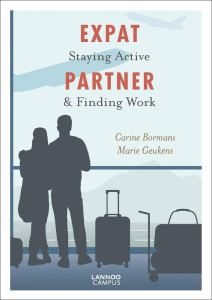


#4 Expat Partner: Staying Active & Finding Work

Carine Bormans and Marie Geukens

(Lanoo Publishers)

Can you plan your professional future as an expat partner? Can you pursue a career in your new location? What are your expectations and priorities?

Sage advice from the experts.



#5 Hanna and the Flying Carpet

Heidi Olsson

(Springtime Books)

Hanna is a girl who belongs in many places in the world, but she’s sick of goodbyes. Omar got new opportunities in a new country, but he misses his cousins. Abdi is an inventive guy who found a solution when he missed his grandma. Three kids with magic eyes on a magic adventure.

A magical multi-cultural tale for kids.



#6 Life Beyond the Castanets: My Love Affair with Spain: Book 2

Jean Roberts

(Independently published)

With their life in Spain established, Jean and Adrian look forward to an idyllic retirement. But when Mother Nature throws up formidable fires, floods and flu, their dreams, along with much of their house, are shattered.

An absorbing read for these COVID days.



#7 Raising Global Teens: A Practical Handbook for Parenting in the 21st Century

Anisha Abraham

(Summertime Publishing)

Globalization has given many of us unparalleled opportunities to work, travel, fall in love, and raise kids all over the world. But it has made being a teen more complicated than ever.

Enlightening for all parents, regardless of where you are.
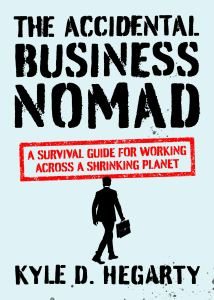


#8 The Accidental Business Nomad: A Survival Guide for Working Across a Shrinking Planet

Kyle Hegarty

(Nicholas Brealey Publishing)

An unvarnished, story-driven, practical guide to working across cultures. The book features real stories of companies going global, warts and all. Each is a fascinating lesson on the cultural realities and unexpected surprises of modern globalisation.

Candid, entertaining and packed with real life stories.



what about your saucepans_expat books 2020_expat nest

#9 What About Your Saucepans?

Lindsay de Feliz gave up marriage and a successful career in the UK to follow her dreams as a scuba diving instructor in the Dominican Republic. She met and married her Dominican man and went on an incredible adventure that also had a dark side – political corruption. Lindsay tells it how it is, and in the telling her deep love for the Dominican Republic, its culture and its people shines through.


A compelling story interwoven with just the right amount of humour
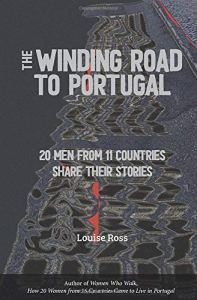


#10 The Winding Road to Portugal: 20 Men from 11 Countries Share Their Stories

Louise Ross

(Moyhill Publishing)

How do men navigate life at a time fraught with great uncertainty and rapid change, working and moving country to country, on their own or with a family? Is their path easy, because they’re men, fortuned with greater liberties than women? Or do they encounter a different set of challenges, faced with the complexities of what it means to be a man today?

Clever and well-crafted book which lets the men do the talking.


For information as to how Relocation Africa can help you with your Mobility, Immigration, Research, Remuneration, and Expat Tax needs, email info@relocationafrica.com, or call us on +27 21 763 4240.

Sources: [1], [2]. Image sources: [1], [2].

Recently, we launched outbound immigration services to various locations, including the United States, which you can learn more about by visiting our website here, or viewing our outbound services brochure here.

Our Immigration Lead, Lynn Mackenzie, recently had the pleasure of speaking to Noah, our United States Immigration partner, about the immigration landscapes in the US.

To listen to Lynn and Noah’s conversation about immigration in the current context, click here to view the recording, or view it below.

We would like to say a huge thank you to Noah for his insights. We hope you enjoy the recording.

For information as to how Relocation Africa can help you with your Mobility, Immigration, Research, Remuneration, and Expat Tax needs, email info@relocationafrica.com, or call us on +27 21 763 4240.

Sources: [1], [2]. Image sources: [1], [2].  

Courtesy of Klug Law Firm.

On November 23, 2020, U.S. District Judge Jeffrey S. White heard arguments focused on a single question: Did the Department of Homeland Security (DHS) and Department of Labor (DOL) have “good cause” to bypass standard rulemaking procedures and publish emergency regulations to restrict H-1B visas? The plaintiffs – businesses and universities led by the U.S. Chamber of Commerce – argued case law, economic data and the Trump administration’s actions show good cause did not exist. The DOL rule took effect on October 8, 2020, and the DHS rule is effective December 7, 2020, unless blocked. The plaintiffs are asking the court to vacate both regulations.

The Administrative Procedure Act (APA) requires federal agencies to provide notice and the opportunity to comment before a regulation goes into effect. The Trump administration published the DHS and DOL H-1B rules “interim final” and claimed “good cause” reasons existed that justified the agencies publishing the regulations (and allowing them to go into effect) before allowing the public to comment. This is the central dispute between businesses and universities and the Trump administration in U.S. Chamber of Commerce et al. v. DHS et al. – whether the economic situation created by the coronavirus pandemic provides DHS and DOL with a “good cause” exception for its actions.

Paul Hughes of McDermott Will & Emery, the lead counsel for plaintiffs in the Chamber lawsuit, emphasized the high stakes during the November 23rd hearing. “We think this is an overt attempt to destroy the H-1B program,” said Hughes, and several company executives and university leaders provided declarations to that effect. Zane Brown said, “Many of Amazon’s most tenured employees,” including data scientists and software engineers, would have to leave the United States. At the same time, Hughes cited the reliance issue for the University of Utah and its 350 H-1B visa holders, five hospitals and 12 clinics. The university’s attorney said the DHS rule would cause “substantial irreparable harm.”

Hughes also cited the Trump administration as a source. Ken Cuccinelli at the Department of Homeland Security said up to 200,000 H-1B professionals could lose their jobs under the rule. The Department of Labor estimated its rule, which inflates H-1B wage requirements by 40% or more, would cost employers $198 billion over 10 years, making it potentially the most expensive regulation imposed on businesses in modern U.S. history, based on an analysis by the U.S. Chamber of Commerce.

During the court hearing, held via Zoom, the Trump administration did not offer strong responses to arguments plaintiffs put forward in their reply brief or in court. Below are the arguments central to the case.

First, at the hearing, Paul Hughes noted the DHS and DOL rules failed to connect the H-1B visa category to the coronavirus-related economic problems. He pointed to a National Foundation for American Policy (NFAP) analysis of Bureau of Labor Statistics data that showed: “The U.S. unemployment rate for individuals in computer occupations stood at 3.5% in September 2020, not changed significantly from the 3% unemployment rate in January 2020 (before the pandemic spread in the U.S.).” Hughes also noted from the NFAP analysis that there were over 655,000 active job vacancy postings advertised online in computer occupations in the United States as of October 2, 2020.

The data cited by Hughes was available to DHS and DOL before issuing the rules, along with DHS statistics that show most H-1B visa holders work in computer occupations. Hughes successfully litigated for a preliminary injunction against the Trump administration’s June 2020 proclamation (which restricted the entry of H-1B, L-1 and other visa holders). In granting the preliminary injunction in October (NAM v. DHS), Judge White cited NFAP research and other evidence indicating Covid-19 unemployment problems were not focused in computer jobs. During the November 23rd hearing, Hughes noted the government had an even higher burden of proof to show a “good cause” exception for its two recent rules than the standard it used to defend (unsuccessfully) the president’s authority to issue the June 2020 proclamation.

Second, the Trump administration’s attorney offered a limited response to the plaintiffs’ point that DHS and DOL did not address the lack of connection to H-1B visas and coronavirus-related unemployment. The government’s attorney repeated the argument in the DHS rule that the unemployment rate had increased in the Information sector and the Professional and Business Services sector. Hughes responded, citing the National Foundation for American Policy report, that these “sectors” include all employees of a company – and only approximately 10% of the jobs (computer occupations with a B.S. or higher) in the sectors are in occupations similar to professionals in the H-1B category.

The Trump administration’s attorney argued DHS was focused on the “health of the sectors.” Yet that argument appeared weak in light of the impact of the DHS and DOL rules: How would imposing $198 billion in additional regulatory costs on companies in these sectors improve the “health of the sectors”?

Third, the administration also did not appear to successfully respond to the plaintiffs’ argument that DHS and DOL waited more than 6 months to issue rules after the national unemployment rate reached its height in April 2020. “Courts routinely reject claims of good cause when an agency delays promulgating a rule in the face of an emergency and then claims that that very emergency leaves no time for notice and comment – just as the agencies have done here,” the plaintiffs argued in a reply brief. (The plaintiffs cited Air Transp. Ass’n of Am. v. DOT.)

The administration’s attorney said the agency was looking at the pace of recovery and long-term unemployment. Hughes argued DHS did not cite long-term unemployment in its rule, and DOL would have known about long-term unemployment as a consequence months ago. Besides, plaintiffs argued, the unemployment rate has improved significantly since April.

Hughes argued the two rules were on the administration’s agenda for years, and the emergency was the 2020 election (i.e., not an acceptable reason for a “good cause” exception). He also noted to make its case on unemployment, the administration cited an article back on March 27, 2020, but that since that time, DHS and DOL had published several rules that had nothing to do with H-1B visas, further evidence of a lack of emergency that warrants a good cause exception.

Fourth, the Department of Labor stated in its rule that companies would rush to submit labor condition applications (LCAs) under the rules in place for the past 16 years if companies had “[a]dvance notice of the intended changes.” Alexandra Saslaw, representing the administration, argued, “This is a case where the agency [DOL] has significant expertise regulating businesses, and they’re using their predictive judgment to determine what those businesses might do in response to a very clear economic incentive.”

Hughes responded that precedent shows “predictive judgment alone” is not enough for an agency. There also has to be evidence. More pointedly, Hughes said, “We don’t think this argument advances the government’s position because it relies on the notion that they had to keep the DOL rule change a secret, but the government didn’t keep it a secret.” He pointed out not once, but twice, the Trump administration declared it intended the Department of Labor to impose a rule virtually identical to the rule it published. The first time came in a press call with reporters on June 22nd and the second time, on August 2nd, the president mentioned the upcoming regulation during an Oval Office media event.

It is never easy to block government regulations by convincing a court to vacate them. On behalf of the plaintiffs, Paul Hughes appeared to make the stronger legal and factual arguments. Judge White will decide if what plaintiffs describe as an “overt attempt to destroy the H-1B program” will be stopped.


For information as to how Relocation Africa can help you with your Mobility, Immigration, Research, Remuneration, and Expat Tax needs, email info@relocationafrica.com, or call us on +27 21 763 4240.

Sources: [1], [2]. Image sources: [1], [2].

Levana Primary School in Lavender Hill is one of 1010 Western Cape schools that depend on government’s National School Nutrition Programme (NSNP) feeding scheme. The school has 1090 learners. Only half of them attend at any one time because of rotational classes introduced due to Covid-19, but “those children must still eat”, says Shamiega Charity, Acting Principal at Levana Primary.

Before the pandemic, she says they were feeding 300 to 400 children. The numbers have doubled. Once the learners are fed, any remaining food is distributed to the community. At the start of the lockdown, the school would feed up to 800 children and people in the community. “We would run out of food,” she said. A grade 7 learner told GroundUp that she will sometimes take a loaf of bread home for her family.

Lavender Hill has “severe poverty”, gangsterism, unemployment and substance abuse, says Charity. Teenage pregnancies are “the norm once you leave primary school” and “because the parents are young, they don’t know how to be a parent”. Most learners live in crowded shacks, some located right next to the school’s bulletproof fence. Children need clothes and food to take home; teachers assist where they can, she says.

Levana Primary was established in 1977 and is a no-fee school. The feeding scheme started over 13 years ago with peanut butter and bread. Today, the school has two organic vegetable gardens growing lettuce, potatoes and spring onions. There is also a medicinal and fynbos garden. As an eco school, environmental issues and sustainability are taught as part of the syllabus.

The food is sponsored by a network of organisations and people, but it is largely dependent on the NSNP. “The program provides funding to the school to purchase the required cooking equipment and eating utensils, as well as for the monthly gas purchases for cooking. There are two food preparers funded by the NSNP, as well as three gardeners to assist with food production,” says Kerry Mauchline, spokesperson for education MEC Debbie Schäfer.

The NSNP provides dry food items to the school every second week and fresh produce such as fruit, vegetables and milk twice a week. Five days a week children are fed two meals a day. On Monday, it’s fish breyani, Tuesday, samp and beans, Wednesdays and Thursday, vegetables, and Friday, soup or breyani.

“For many of these children, a school meal might be the only one they have that day,” says Mauchline. The situation has got dramatically worse because of the Covid-19 pandemic. In the Western Cape, 473 174 learners are registered on the program, she says. Children can’t focus on learning if they are hungry, says Charity. She says one day she would like there to be a food dining hall where the children can sit together and eat around a table.


For information as to how Relocation Africa can help you with your Mobility, Immigration, Research, Remuneration, and Expat Tax needs, email info@relocationafrica.com, or call us on +27 21 763 4240.

Sources: [1], [2]. Image sources: [1], [2].