On Tuesday (19 May), join API for the webinar: The impact of Covid-19 on the SADC region, and on Thursday (21 May) for the panel: West African Real Estate in the African context. Both sessions will provide deep level insights from developers, operators, funders and more on the impact of the pandemic on these real estate regions. Register below and see who’s joining us on these high impact panels.
For information as to how Relocation Africa can help you with your Mobility, Immigration, Research, Remuneration, and Expat Tax needs, email info@relocationafrica.com, or call us on +27 21 763 4240.
The impact of South Africa level 5 lockdown in April on local vehicle sales is clearly visible, with the National Association of Automobile Manufacturers of South Africa reporting that just 574 vehicles were sold over the entire month.
Domestic vehicle sales dropped by 98.4% from a year earlier to 574 units, the National Association of Automobile Manufacturers of South Africa said in an emailed statement Monday. That compares with average monthly trade of more than 41,000 units over that last 20 years.
In a research note, Nedbank noted that these low sales levels are completely unheard of and that the outlook for new vehicle sales for the rest of this year has also been dimmed by the effects of the Covid-19 pandemic.
This comes against the backdrop of an industry that was already facing a fundamentally weak domestic economy, it said.
“We expect fixed investment spending to plunge by almost 15% in 2020 and this will negatively impact sales of commercial vehicles.
“The rental industry, which has propped up passenger car sales in recent years, is also likely to cut back on purchases in the face of falling business and leisure travel, while the rand’s significant depreciation will eventually exert upward pressure on vehicle prices,” Nedbank said.
It also warned that lower activity in the vehicle sector will significantly contribute to the broad-based weakness in the economy, as vehicle manufacturing contributes 30.1% to total manufacturing and accounts for 457,000 formal sector jobs.
The group expects real GDP to contract by 7% in 2020, which is in line with the Reserve Bank’s projection of a 6.1% slump and National Treasury’s projected 5.4% contraction.
“Consumer demand will be constrained by lower incomes, the effect of which will more than offset the benefit of the 225-basis-point cut in interest rates.
“We expect fixed investment spending to plunge by almost 15% in 2020 and this will negatively impact sales of commercial vehicles.”
For information as to how Relocation Africa can help you with your Mobility, Immigration, Research, Remuneration, and Expat Tax needs, email info@relocationafrica.com, or call us on +27 21 763 4240.
https://www.relocationafrica.com/wp-content/uploads/2020/05/Group1kuilsriver-header.jpg7001920Andrew Stegmannhttps://www.relocationafrica.com/wp-content/uploads/2020/09/relocationafricagroup.jpgAndrew Stegmann2020-05-18 14:40:382020-05-18 14:40:40Car Prices in South Africa are Set to Rise, According to Some Economists
More than 100 South African doctors who studied overseas are in limbo because the country’s presiding medical board is allegedly preventing them from writing an exam that would allow them to practice in their home country.
As South Africa’s fight against Covid-19 intensifies, News24 can reveal that a group of qualified and trained doctors are sitting at home without work. They have turned to the courts in the hope of getting an order to allow them to take the Health Professionals Council of SA (HPCSA) board exam, which would qualify them for internships at public hospitals.
In papers filed in the Gauteng High Court, 38 foreign-trained doctors allege that the HPCSA gave an assurance more than once that they would be able take the exam, only to later renege on the basis that the medical schools they studied at – in Romania, China and Guyana – are not “recognised” by the HPCSA.
Doctors, who have been trained and qualified at foreign medical schools, have been battling with the council since at least 2018.
Memorandum
The organisation representing the doctors, South African Internationally Trained Health Professionals Association (SAITHPA), has also written a memorandum to the Presidency and the Ministry of Health to ask them to investigate allegations of corruption, racism and victimisation faced by foreign-trained doctors.
SAITHPA claims that at least 175 foreign-trained doctors are without work because of various obstacles the HPCSA has allegedly put in their way. However, interviews News24 has done with affected doctors, who are part of the court case, as well as academics involved in internship programmes, suggest the number could be higher.
The memorandum to the Presidency also contains allegations that doctors who wrote a board exam in January are still waiting for their results.
This situation is sure to cause a stir among the medical fraternity, which was recently criticised by the Department of Health for roping in Cuban doctors to aid the Covid-19 fight – an effort that apparently costs more than R400 million – while dozens of trained doctors stew at home.
Health Minister Zweli Mkhize defended the Cuban doctors’ arrangement, saying they were merely here to supplement medical efforts and not to take jobs.
‘Repeatedly failed’
The HPCSA has not responded to the allegations in court. The body was sent a detailed query, but did not respond for several days before publication.
The Department of Health referred News24 to the HPCSA, but said it was aware of “some South Africans who trained in some foreign countries but have repeatedly failed HPCSA board examinations”.
“Government cannot risk employing persons who are not duly qualified,” spokesperson Popo Maja said.
The Presidency did not respond to a request for comment.
Court action
In court papers, Sarvashni Chetty, a doctor who graduated at the Texila American University in Guyana, alleges in an affidavit that 12 of the applicants had applied to write the board exam in 2019, but were unable to because the exam can only take 120 applicants.
On the back of this, the Legal Resources Centre (LRC), on behalf of 111 foreign-trained doctors, threatened the HPCSA with legal action if the doctors were not able to sit the exam.
The HPCSA later allegedly allowed 60 of them to take the exam in January 2019, and the rest would take it in a slot in May that year.
But the council later allegedly reneged on this commitment for some who had applied for the board exam, on the basis that “the institution from which they obtained their basic medical degree was ‘not evaluated by the relevant Medical and Dental Board previously’.”
This effectively left foreign-trained doctors in limbo, while the HPCSA would “review the curriculum offered at the universities that the applicants graduated from”, court papers allege.
‘Unanswered’
The affidavit then lists 14 times SAITHPA or doctors wrote to the HPCSA to furnish them with the details of their qualifications or to try to come to an understanding, or to place on record exactly which medical schools it did recognise. These allegedly went unanswered.
Eventually, on 16 August, 2019, the HPCSA allegedly gave its “assurance” that those who SAITHPA represented would write “the first available examination in 2020”.
However, the following month, the HPCSA allegedly wrote to SAITHPA saying it was “unable to commit” to that arrangement.
The other 37 applicants filed confirmatory affidavits of Chetty’s allegations.
Her affidavit says the situation has left her and her fellow applicants suffering “severe emotional, financial and other prejudices”.
‘Invaluable in an emergency situation’
Meanwhile, the memorandum to the Presidency says results for a board exam that doctors took in January have still not been released, without a reason.
“Consequently, graduates who qualified to register for internship in the mid-year cycle, were unable to do so,” the letter reads.
Dr Robert Ian Caldwell, a retired doctor who was involved with foreign-trained medical students during his time at the University of KwaZulu-Natal’s School of Clinical Medicine, said he had also been alerted about these results not being released.
Caldwell said even though passing this exam would only qualify the doctors to take on internships, they would still be useful during a crisis such as the one the country currently faces.
“Even at the most junior level, they’d be invaluable at an emergency situation.”
For information as to how Relocation Africa can help you with your Mobility, Immigration, Research, Remuneration, and Expat Tax needs, email info@relocationafrica.com, or call us on +27 21 763 4240.
https://www.relocationafrica.com/wp-content/uploads/2020/03/cdc-w9KEokhajKw-unsplash.jpg900016000Andrew Stegmannhttps://www.relocationafrica.com/wp-content/uploads/2020/09/relocationafricagroup.jpgAndrew Stegmann2020-05-15 10:20:252020-05-28 11:44:13Foreign-trained Doctors Turn to the Courts to Be Able to Work in SA
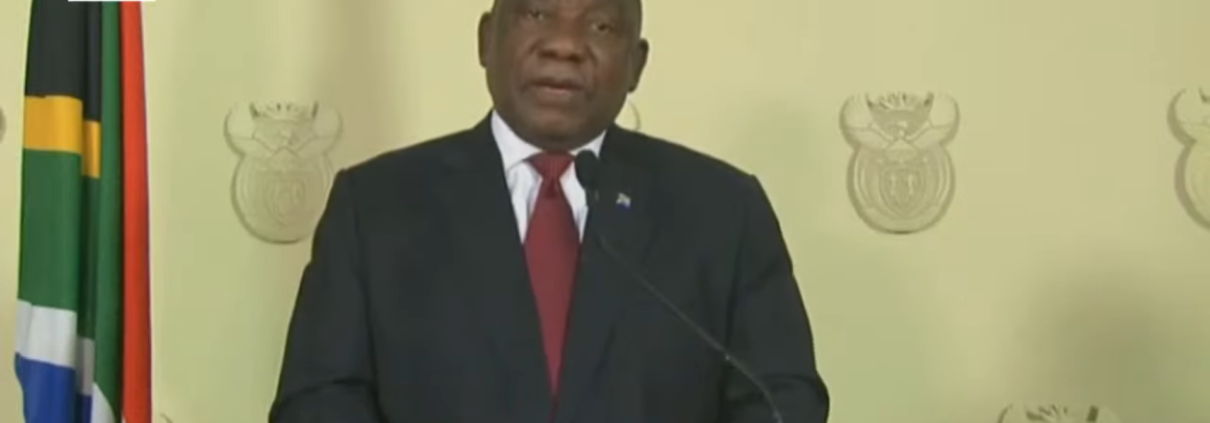
In a televised address, Ramaphosa said the next phase of the country’s coronavirus response, as people returned to work, would “in many ways be more difficult than the present one”.
He added the coronavirus would continue to be a global health threat for some time to come, and the fight against it needed to become part of South Africans’ daily lives.
South Africa would have seen 80 000 infections already without lockdown
Without a national lockdown, South Africa would have seen 80 000 infections by now, Ramaphosa said. The national lockdown was, therefore “absolutely necessary” to help the authorities prepare.
He said while South Africa mourned the loss of 219 lives due to the virus, the number of deaths would have been eight times higher without the lockdown.
He said by the time the US had a similar stage of the disease, it had recorded 22 000 deaths and the UK more than 19 000.
Without the lockdown, Ramaphosa added, South Africa’s health facilities would have been overwhelmed and many thousands more people would have died.
Around 181 people per million have been infected by the virus
South Africa’s positivity rate, the percentage of cases identified out of all the tests conducted, had remained low, he said.
Ramaphosa added the number of confirmed infections in South Africa was around 181 people per million of the population.
By contrast, he said, countries such as the US, the UK, Spain, Italy and Singapore have between 2 400 and 4 600 coronavirus cases per million people.
“It is significant that out of the 12 074 confirmed cases in South Africa, we have recorded 4 745 recoveries.”
South Africa now has 25 000 additional beds for quarantine
Ramaphosa said by delaying the spread of the virus, South Africa was able to strengthen the health system’s capacity by increasing the number of beds available for quarantine by 25 000.
He added the lockdown had helped the country to source and produce substantial quantities of personal protective equipment for health workers, vital medical equipment and other supplies.
Ramaphosa thanked the US for a donation of 1 000 ventilators that will assist in treating serious coronavirus patients.
Over 9 million South Africans have been screened, 370 000 tested
In what is the country’s largest and most extensive public health mobilisation, Ramaphosa said fieldworkers have screened more than nine million people, and nearly 370 000 coronavirus tests have been completed.
“It has been made possible by the hard work and dedication of thousands of community workers, nurses, doctors and other health workers,” he added. “They made enormous sacrifices to ensure the success of the lockdown.”
UIF paid out over R11bn to 2 million employees
Ramaphosa said the special Covid-19 relief fund of the Unemployment Insurance Fund (UIF) had paid out more than R11 billion to two million employees employed by over 160 000 companies in distress since it was launched.
He added the government’s various funds have supported more than 27 000 small businesses since they were launched.
The government’s R200 billion Covid-19 loan guarantee scheme, which is part of the R500 billion relief package, has also started to process applications from small- and medium-sized businesses on Wednesday.
Around 3 million South Africans applied for Covid-19 grant
Some three million people have applied for the Covid-19 grant of R350 per month for unemployed South Africans who received no other form of assistance from the government, Ramaphosa said.
He added an additional R5 billion have also been paid out to social grant recipients at the beginning of May to assist poor households.
Level 3 lockdown for most of South Africa by end of May
Ramaphosa said a consultation process would start with relevant stakeholders to place most of the country on Level 3 lockdown by the end of May.
Parts of the country with the highest rates of infection will, however, remain on Level 4 lockdown.
Infections were for now mostly concentrated in a few metropolitan municipalities and districts in the country, Ramaphosa said.
“I will repeat what I have said before: If we lift the lockdown too abruptly and too quickly, we risk a rapid and unmanageable surge in infections,” he added.
Level 3 lockdown will see the return of alcohol sales between 08:00 and 12:00 between Mondays and Wednesdays, limited domestic air travel, and all clothing and textiles sales, under draft rules.
Level 4 lockdown regulations will change
The government would in the coming days announce certain changes to Level 4 regulations to expand permitted business activities in the retail space and e-commerce and reduce restrictions on exercise, Ramaphosa said.
Some lockdown regulations have been unclear and contradictory
He added some of the lockdown regulations decided upon by the government have been unclear, some have been contradictory and some have been poorly explained.
Ramaphosa said implementation had sometimes been slow and enforcement had sometimes been inconsistent and too harsh.
“This evening, I want to reaffirm my commitment and the commitment of the government I lead to take whatever action is necessary to safeguard the life, the dignity and the interests of the South African people.
“Where we have disappointed, we will continue to make amends. Where we make mistakes, we will continue to correct them.”
View the full address below.
For information as to how Relocation Africa can help you with your Mobility, Immigration, Research, Remuneration, and Expat Tax needs, email info@relocationafrica.com, or call us on +27 21 763 4240.
https://www.relocationafrica.com/wp-content/uploads/2020/05/Ramaphosa.png10801920Andrew Stegmannhttps://www.relocationafrica.com/wp-content/uploads/2020/09/relocationafricagroup.jpgAndrew Stegmann2020-05-14 09:55:302020-05-14 09:55:31Main Points from South African President Ramaphosa’s COVID-19 Address