Tag Archive for: COVID-19

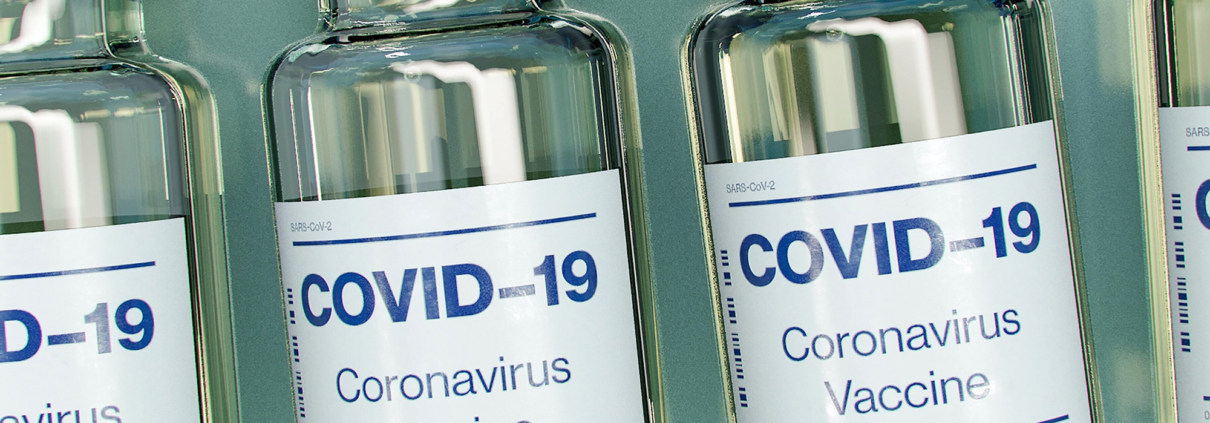
The National Department of Health and the Solidarity Fund announced that the country’s Covax participation has been secured after the down payment needed was been made.

On Tuesday, the Health department said that the down payment of $19.2 million (about R283m) has been made to Gavi (the Vaccine Alliance) to secure South Africa’s entry into the Covax facility.

The World Health Organization describes the Covax programme as the global initiative aimed at working with vaccine manufacturers to provide countries worldwide with equitable access to safe and effective vaccines.

The payment was made in line with the fund’s previous allocation of funds and commitment to support the government’s efforts to accelerate the roll-out of vaccines in South Africa.

Covax has confirmed South Africa’s entry into the facility.

The down payment represents 15% of the total cost of securing access to vaccines for 10% (roughly 6 million) of the population. The country’s membership in the Covax facility ensures that South Africa receives its equitable share of the vaccine once it becomes available.

Solidarity Fund chairperson Gloria Serobe said: “There can be no doubt that a Covid-19 vaccine will play an important role in helping South Africa manage the virus.

“The Solidarity Fund was set up for exactly this purpose – to be additive to the work of the government and assist in initiatives and programmes that have the greatest impact in the fight against the pandemic. The fund is grateful to be in a position to assist at this crucial juncture.”

Department of Health Director-General Dr Sandile Buthelezi said: “I would also like to take this opportunity to thank the Solidarity Fund for providing the financial support that has enabled the country to meet the down payment obligations as required in terms of the agreement.

“The Department of Health will make additional payments, in relation to vaccines delivered under the Covax facility, as they fall due over the next year.”

Health Minister Dr Zwelini Mkhize hailed this milestone.

“It is a privilege to oversee a process that has brought together the government, international partners and business for the sole purpose of delivering quality health care to the people of South Africa.

“This is what we have been advocating for when we speak of multisectoral collaboration, and it is gratifying to see this spirit being harnessed for the good of our people, Africans and the global village,” he said.

“We convey our sincere gratitude to the Solidarity Fund for their unwavering support to the government, to ensure that no one gets left behind as we seek to protect our most vulnerable citizens against the scourge of Covid-19.

“The collaboration with the Covax facility will continue as South Africa ramps up efforts to put the necessary systems and processes in place to ensure that, amongst other health systems strengthening and logistical requirements, the cold supply chain is ready to immunise the population identified.


For information as to how Relocation Africa can help you with your Mobility, Immigration, Research, Remuneration, and Expat Tax needs, email info@relocationafrica.com, or call us on +27 21 763 4240.

Sources: [1], [2]. Image sources: [1], [2].

The Department of Science and Innovation (DSI), will pump R25 million towards the KwaZulu-Natal Research Innovation and Sequencing Platform (KRISP) as scientists grapple with the new Covid-19 variant.

Higher Education, Science and Innovation minister, Dr Blade Nzimande, announced this on Friday, during a joint briefing with the Department of Health and scientists.

“This was in the wake of the latest surveillance results that shows a worrying trend of the highly transmittable Covid-19 variant first identified in Nelson Mandela Bay, Eastern Cape, and moved to the Western Cape, KwaZulu-Natal and is now the dominant and possibly the only Covid-19 variant responsible for the current surge,” said the department.

According to the department, the R25 million of the R45 million required over the next 12 months will help scientists to complete the sequencing of Severe Acute Respiratory Syndrome Coronavirus 2 (SARS-CoV-2) 10 000 genomes in South Africa and Africa.

A group of scientists discovered the new “unusual” coronavirus variant called 501.V2, which is spreading rapidly in the country.

According to health department minister, Dr Zweli Mkhize, this variant is seeing a larger proportion of younger patients with no comorbidities develop serious illness.

“The evidence that has been collated, therefore, strongly suggests that that the current second wave we are experiencing is being driven by this new variant.”

The department said the grant will be used to understand the spread of Covid-19 and other virus lineages on the continent while also supporting the clinical and laboratory investigations of the genomic variation in the country.

“This is in line with the use of pathogen genomics for monitoring of transmission dynamics of infectious agents and potential vaccine escape is of crucial importance to South Africa, Africa and the world,” said minister Nzimande.

Nzimande said that these funds will be used to acquire equipment to automate the sequencing system and to buy reagents and other laboratory consumables.

Meanwhile, in April 2020, DSI through the Strategic Health Innovation Partnership funded KRISP for the project, ‘Spatial and Genomic monitoring of COVID-19 cases in South Africa to fight the flames before they become a wildfire’ to a tune of R10 million.

“This resulted in the establishment of the Network for Genomic Surveillance in South Africa in June 2020, with the goal to sequence the genome of at least 10 000 SARS-CoV-2 samples to inform the public health response in South Africa, and to use spatial and genomic monitoring of Covid-19 cases to help the government to identify hotspots of transmission and control the local epidemic.”

Meanwhile, the minister said the next step is to get a better understanding of whether there is any clinical and epidemiological evidence to suggest increased transmissibility and/or pathogenicity of the virus and/or vaccine escape.

KRISP

KRISP was established in 2017, situated at the University of KwaZulu-Natal’s Nelson R. Mandela School of Medicine.

The department describes KRISP as a cutting-edge genomics centre offering a range of DNA sequencing, precision medicine testing, bioinformatics services and technologies to academic, industrial and commercial users.

The centre is a platform of the Technology Innovation Agency (TIA), an agency of the DSI – a flagship programme of the South African Medical Research Council has established an excellent scientific infrastructure.

“Their vision is to challenge the status quo and establish one of the worlds most advanced and respected genetic sequencing platforms, to enable and support world-class genomics research and diagnostics services in Africa,” he said.

Nzimande said the consortium capacitated five key National Health Laboratory Services and their associated academic institutions to produce and analyse completely viral genomes in South Africa in near real-time.

The main investigators include Professor Tulio de Oliveira, Professor Carolyn Williamson, Dr Jinal Bhiman, Dr Nokukhanya Msomi, Professor Diana Hardie, Dr Marvin Hsiao, Professor Nicky Goedhals and Professor Susan Engelbrecht.


For information as to how Relocation Africa can help you with your Mobility, Immigration, Research, Remuneration, and Expat Tax needs, email info@relocationafrica.com, or call us on +27 21 763 4240.

Sources: [1], [2]. Image sources: [1], [2].

The Department of Health plans to launch a new digital screening pilot project which will allow travellers to complete a required travel health questionnaire (THQ) on their personal devices ahead of their arrival at ports of entry.

The move from paper-based screening systems to a digitized screening solution will take place in a phased approach, the department said.

“The web-based THQ platform will complement and strengthen the existing method of screening and surveillance at ports of entry, as a user-friendly tool allowing travellers to complete the travel health questionnaire on their personal devices prior to their travel,” it said.

How it works

The web-based travel screening solution will allow travellers to complete their travel and symptomatic information at any time from two days ahead of their journey to ensure that the exposure and symptoms information provided is relevant.

Once completed, the traveller will receive a unique number (look-up ID) which they will present to the Port Health official at the respective port of entry to proceed with the screening process.

Over time, as more travellers use this system it can save them time and help fast-track screening at ports of entry.

The department said it will introduce through a pilot, a digitized screening system for international travellers arriving and departing from South Africa.

As of the 17 December 2020, international travellers arriving at O.R Tambo International Airport, those departing from Cape Town International Airport, those entering the country through Beit Bridge land border and those exiting through Maseru Bridge land border will be expected to complete the web-based THQ.

The paper-based system for Covid-19 screening will continue to be in operation at all other operational ports of entry, the department said.

“This system will play a critical role in assisting Port Health with managing travellers, identifying potential high-risk travellers and to respond effectively.”

Security of personal information was one of the top priorities throughout the development of this system. Accordingly, best practice guidelines as per the POPI Act are followed to protect all traveller’s personal information at all times.

Why it’s being introduced 

The department said that the travel system will provide ‘additional armour’ to better manage and survey travellers to prevent importation and exporting of the virus.

The system will also provide better data collection and storage which can be helpful with identifying potential high-risk travellers, it said.

“An algorithm that helps determine the risk profile of travellers is embedded in the system. In the event of a positive case, the system will assist with identifying potentially exposed travellers who were in proximity to the positive case, further assisting with better contact tracing.”

The department said that the new travel system will go live from midday on 15 December to allow travellers to complete the web-based form ahead of their travel, It can be accessed through this link.

Travellers who have already booked their tickets can still access the web-based THQ at any time after the system goes live, the department said.

It added that travellers will still be subjected to the screening protocols in ports of entry, including temperature screening and are still required to present a negative Covid-19 PCR test result obtained not more than 72 hours from time of departure.

Travellers arriving into South Africa are also required to download the Covid Alert SA application on their mobile phones.


For information as to how Relocation Africa can help you with your Mobility, Immigration, Research, Remuneration, and Expat Tax needs, email info@relocationafrica.com, or call us on +27 21 763 4240.

Sources: [1], [2]. Image sources: [1], [2].

South Africa is set to produce its first vaccine in 25 years, but it won’t be a Covid-19 jab. Plans are, however, in place to ‘fill and finish’ Covid-19 vaccines in South Africa.

Aspen Pharmacare will not produce Johnson & Johnson’s Covid-19 vaccine itself in South Africa. Instead, Aspen will be one of six sites globally responsible for putting the vaccine into vials and packing the jabs for distribution, Johnson & Johnson Chief Scientific Officer, Paul Stoffels, confirmed late on Tuesday.

Vaccines go through several different stages from the time they are formulated until they reach clinic shelves. The most complicated phases involve actually creating the vaccine solution. The last and final stage, in which prepared vaccines are filled into vials and packaged for delivery, is often called “fill and finish”.

No plant in South Africa has produced a vaccine itself in 25 years, Biovac Institute CEO, Dr Morena Makhoana says. Biovac is a public-private partnership created in 2003 to revive vaccine production in South Africa after the country stopped producing vaccines locally in the 1990s.

Instead, Aspen and Biovac have historically focused on procuring and distributing jabs or filling and finishing them — as Aspen will do for Johnson & Johnson’s candidate vaccine. The duo is the only two firms working in the vaccine field locally.

Stoffels explains that building new Covid-19 vaccine capacity in South Africa and elsewhere would have taken three to five years. Instead, to quickly meet the demand for the vaccine, Johnson & Johnson will produce the vaccine at three existing plants before shipping it to six centres across the world, including Aspen’s Port Elizabeth factory, for fill and finish.

Johnson & Johnson’s experimental Covid-19 vaccine is in the late stages of human testing, which includes trials in South Africa. Stoffels says the firm expects to know in late January 2021 whether the jab works to protect people from becoming infected with the new coronavirus or developing serious Covid-19 disease.

Stoffels says that about half of Johnson & Johnson’s costs to develop its Covid-19 vaccine have been covered by the United States government, which is one of the reasons the firm will offer the jab at cost during the emergency phase of the pandemic. It has also set aside 500 million doses for the COVAX initiative.

Could South Africa produce a Covid-19 vaccine?

There are almost 350 experimental Covid-19 vaccines in development, according to the United Kingdom’s science analytics company, Airfinity. The World Health Organisation (WHO) says only about four dozen jabs have entered human clinical trials.

Airfinity CEO, Rasmus Bech Hansen, says Covid-19 vaccines fall into one of four main categories. Some jabs like Johnson & Johnson’s vaccine use harmless viruses to deliver proteins into the body and hopefully trigger an immune system response. Others — such as the Novavax vaccine trialled by Wits University — pair sterilised coronavirus proteins or parts of proteins with an immune booster to help the body create Covid-19 fighting antibodies. This kind of vaccine is sometimes called a protein sub-unit jab.

Aspen and the Biovac Institute executives say that one day their firms could produce three out of the four main types of Covid-19 vaccines.

Aspen CEO, Stephen Saad told Spotlight that its Eastern Cape plant could eventually manufacture vaccines, like Johnson & Johnson’s experimental FCovid-19 vaccine, that are often called “viral vector” vaccines.

Biovac, meanwhile, could potentially one day produce Covid-19 jabs such as Novavax as well as the Pfizer/BioNTech vaccine, which uses genetic material produced in labs to trick the body into thinking the coronavirus is present and developing an immune response.

The Coalition for Epidemic Preparedness Innovations (CEPI) is working to secure poorer countries’ access to vaccines via an initiative called COVAX. CEPI has identified Biovac as a potential vaccine producer but has not entered into any formal agreements with the institute, CEPI told Spotlight.

Actually producing a Covid-19 vaccine on local soil will mean that larger pharmaceutical companies such as Johnson & Johnson will have to share some of their vaccine-making know-how with local companies, a process called technology transfer.

No quick and easy path to local production

It has taken the Biovac Institute almost 20 years to produce a vaccine from start to finish in the country. It can take anywhere from three to five years and as much as R8.9-billion to build plants to produce certain types of vaccine solutions and Makhoana says financing has been an issue.

But Biovac announced in November that it would soon begin locally producing drug firm Sanofi Pasteur’s six-in-one vaccine to protect children against illnesses such as polio, tetanus and hepatitis B.

The move follows eight years of work with the vaccine’s developer, Sanofi, to transfer the technology needed to produce the six-in-one jab in South Africa and for the local market, Makhoana says.

Johnson & Johnson has entered into a technology transfer agreement with Aspen to fill and finish its Covid-19 vaccines. Aspen declined to release details on the deal.

However, Doctors Without Borders (MSF) Access Campaign Advocacy Officer, Candice Sehoma says the agreement is more of a manufacturing deal than a meaningful transfer of technology that would bolster local production. And, she says, the deal may not guarantee South Africa better access to a Covid-19 vaccine.

“Yes, Aspen will be doing the fill and finish, but at the end of it, Johnson & Johnson still holds the intellectual property rights on that vaccine. They get to determine who, where and how their vaccine is distributed,” she told Spotlight. “Knowing that high-income countries have secured most of the [world’s] vaccines, it really leaves much in question as to… will whatever is being filled and finished locally stand to benefit South Africa and the continent.”

The United States, European Union and India alone purchased more than four billion doses of experimental Covid-19 vaccines before any jab had been shown to work, according to an analysis by Duke University in the United States.

Showdown over Covid-19 patents expected at World Trade Organisation

Meanwhile, South Africa and India have submitted a joint proposal to the World Trade Organisation (WTO) that would allow countries to waive some intellectual property rights on Covid-19 medicines, vaccines, masks, ventilators and other materials for the duration of the pandemic. Some similar provisions already exist in international trade law, but are difficult to use in practice.

However, the WHO-backed proposal — expected to be discussed at the WTO on Thursday — is facing stiff opposition from countries and the pharmaceutical industry.

The United States, United Kingdom, and Japan — who were among the first countries to buy massive amounts of Covid-19 vaccines — were among nations opposing the patent waiver by October.

Stoffels says that there are more immediate barriers to scaling up access to Covid-19 vaccines than technology transfers or patents. He explains it has been difficult to even ensure Johnson & Johnson’s manufacturing plants have the new technology needed to produce its experimental Covid-19 vaccine.

“We are developing a new production technology and scaling up [production] all at the same time,” he says while adding that the technology is still evolving. “We don’t even have enough people to do our own tech transfers to our own manufacturing facilities. We have had to find the people,” he says.

“Maybe there’s time for [that kind of tech transfer] in the next five to 10 years but at the moment, we’re focused on getting the technology stable ourselves to make sure we can supply next year.”

But speaking earlier this year, MSF’s Access Campaign Senior Vaccines Policy Adviser, Kate Elder, says she believes that the world can ramp up vaccine manufacturing while also removing patent-related barriers for future production.

“Nobody is under any naïve pretence that if there was no intellectual property then everybody is going to be able to produce vaccines,” Elder said in October. “Let’s be clear: It’s difficult to develop vaccines, and it’s difficult to manufacture them… but there is tremendous capacity in places like India and Brazil,” she said.

“You can expand manufacturing capacity and [ensure] intellectual property barriers aren’t a hindrance for any manufacturer that has the capacity to produce quality-assured, future Covid-19 vaccines.”

Airfinity predicts that access to vaccines will help curb outbreaks in the United States by March, followed by Canada, the United Kingdom and the European Union later next year. India and China are expected to follow suit in 2022.

“There’s more uncertainty around the rest of the world,” Bech Hansen says. “It really depends on the results of upcoming trials and the availability of large-scale production facilities.”


For information as to how Relocation Africa can help you with your Mobility, Immigration, Research, Remuneration, and Expat Tax needs, email info@relocationafrica.com, or call us on +27 21 763 4240.

Sources: [1], [2]. Image sources: [1], [2].