“A certificate issued by the police or security authority in each country where the relevant applicant resided for 12 months or longer after attaining the age of 18 years, in respect of criminal records or the character of that applicant, which certificate shall not be older than six months at the time of its submission: Provided that the certificate shall not be required from a foreign country in the case of renewal or extension of a visa but from the Republic”.

With effect from the 01st of October 2016 The Department of Home Affairs will automate the process of obtaining a South African Police Clearance Certificate. Instead of the applicant going to a police station to apply for a police clearance, VFS will use the applicant’s biometrics (fingerprints) which we are already collecting in the current process and use them to run background checks against the South African Police Services database. On receipt of the electronic police clearance VFS will merge the records with the main application and transmit the contents electronically to DHA as a full and complete application. The SAPS database background check will take an average of 24 – 36 hours, a great improvement from the 3 to 4 months that it takes currently to get a police clearance from SAPS, as reported by applicants. 

The total fee per adult applicant in addition for this service will be R175.00 (Incl. VAT) per criminal background check. The Department is already running this process successfully for both the Zimbawean Special Permit and the Lesotho Special Permit applications. 

Please be advised that the current manual submission of RSA police clearances will be accepted until the 31st of October 2016. This automation of the police clearance is only applicable to RSA police clearance certificates. Any other Police Clearance Certificates issued by the police or security authority in each country where the relevant applicant resided for 12 months or longer after attaining the age of 18 years will still be accepted manually.

For any further questions please contact us.

Tracy du Plessis

Director – Immigration


      E | tracy@relocationafrica.com

      T | +27 (0)21 763 4240

     M | +27 (0)83 650 5269

      F | +27 (0)21 797 7758

      ShareCall | 0860 102 894

      42 Goldbourne Road Kenilworth, 7800, Cape Town

      www.relocationafrica.com

Homophobic United States pastor, Steven Anderson. Photo: Supplied. Credit: SUPPLIED
Johannesburg – The Department of Home Affairs on Friday said it was in talks with the Lesbian, gay, bisexual, transgender and intersex (LGBTI) organisations and other stakeholders over the openly homophobic US Pastor Steven Anderson’s planned visit to South Africa.

Anderson, who is widely known for his anti-gay sentiments on social media, is scheduled to preach in Johannesburg on 18 September.
Homophobic United States pastor, Steven Anderson. Photo: Supplied. Credit: SUPPLIED
He reportedly told congregants at his Arizona-based Faithful Word Baptist Church that there are now “50 less paedophiles in this world” following the June 12, massacre at Pulse nightclub in Orlando, Florida that left 49 people dead.

The night club was frequented by gay patrons.
In a video doing the rounds in South Africa Anderson maintains his homophobic stance, saying homosexuals deserved to die.

“I don’t condone violence, but gays should be executed,” Anderson says in the video.

In another video Anderson says SA Home Affairs Minister, Malusi Gigaba, can not legally ban him from entering the country and that he had misled the public by claiming that he had the powers to do so.

In a statement, the Department of Home Affairs said they had noted Anderson’s comments.

The department said an official announcement would be made after finalising the consultations with LGBTI organisations and other stakeholders.

“The basis of our work is on managing comments directed at the LGBTI community and their rights. We are not prepared to expend our energy on dealing with irrational aspersions directed at the Minister,” Home Affairs said.

“If we were to react to every insult directed at the minister or the department, then South Africa will indeed become an empty country.”

The department said it wanted to reaffirm its support for the LGBTI community.


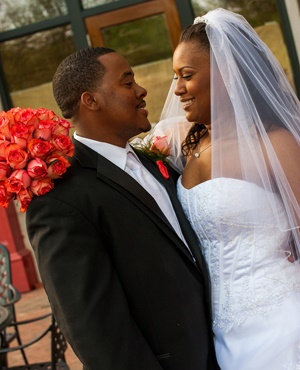
Bride and groom standing in a courtyard after the wedding.

Bride and groom standing in a courtyard after the wedding.

Couples planning to get married this spring may be forced to postpone their wedding ceremonies, as the department of home affairs is experiencing a countrywide shortage of marriage registers.

Since May 2016, marriage officers in private practice have reportedly not received the documents from the department, and they are fuming.

City Press has seen several correspondences between marriage officers and the director of births, marriages, deaths and records management at the department of home affairs, Aaron Ramodumo, in which a majority appealed unsuccessfully to get new copies of marriage registers from the department.

A Pretoria-based marriage officer, Jaco Venter, said he had not received new marriage registers for three months.

“We have a shortage of marriage registers in the country and very little is being done about it.

“Our biggest frustration is inconsistency in the different offices. You’ll find five different opinions regarding regulations, rules and laws within one office.

“No one knows what is going on. Each one has his or her own interpretation of what is right or not,” complained Venter.

Ramodumo confessed in several emails sent to complaining marriage officers: “It is true that we are dealing with some internal matters relating to the acquisition of marriage registers. The chief director … has pleaded with supply chain to speed up the process. I remain hopeful that we will get the registers soon.”

“I only have six marriage registers left,” said Venter.

In another email to a desperate marriage officer, who asked not to be named for fear of victimisation, Ramodumo wrote: “I am aware we are still to do stock taking; we are very soon going to crash, as there is a desperate need for DHA-30 forms [marriage registers] (sic).”

However, the department insisted that there was no crisis, saying there were more marriage registers than needed.

“It’s a question of provincial managers not allocating registers to specific offices,” said the department’s spokesperson, Mayihlome Tshwete.

KATHARINE CHILD | 12 September, 2016 07:05

Image by: Gallo Images/Thinkstock

In the eyes of the state Vusi*, 7, doesn’t exist. He has no birth certificate or ID number.

They are asking the Pretoria High Court to declare sections of the Birth and Deaths Registration Act that discriminate against single, unmarried fathers as unconstitutional and “invalid”.

At present unmarried men cannot register their children’s birth and obtain their ID number without a mother’s consent, according to section 12 of the law.

Vusi was born in Eastern Cape in 2009 but his mother left him and his dad two years later and disappeared.

Vusi’s father, who cannot be named to protect Vusi’s identity, has been unable to trace her.

When he visits the department to get a birth certificate for his son, the officials ask for documents from his mother.

The lack of a birth certificate has “dire consequences” for the child, say the court papers. These include the denial of many constitutional rights, such as the right to an identity, a nationality, a child grant, healthcare and education.

Vusi’s father has indicated a child grant would help Vusi but he cannot access it without the boy’s birth certificate.

The Centre for Child Law, Vusi and his dad now want the law modified to allow single unwed fathers to register their child’s birth without needing the mother’s permission.

Single, unwed mothers do not need a father’s permission to register their child’s birth and get an ID number.

Vusi’s father has tried to resolve the issue without turning to the courts. Last year he took a letter from the Department of Social Development to the Department of Home Affairs explaining that he was the sole caregiver of the child and that the mother could not be traced.

But that did not make any “difference”, read the court papers.

The Centre for Child Law was contacted by a senior Home Affairs official a year ago who promised she would instruct a staff member to give Vusi an ID number and a birth certificate.

But more than a year later nothing has happened.

Out of desperation the three filed legal papers in January asking the court to ensure Vusi got an identity document and that no other children faced similar battles.

Home Affairs did not reply to court papers, as legally required.

Desperate for a response, the Centre for Child Law called a meeting with a judge earlier this year.

The judge ordered the department to file its first set of legal papers by August. This has not happened.

The Department of Home Affairs did not respond to requests for comment.

If you need assistance with registration of birth, unabridged birth certificates contact us info@relocationafrica.com or 021 7634240.