This guest article was written by Howard Baker.

South Africa is one of the most beautiful countries in the world and a popular choice for many expats. It is therefore not surprising to see people from other countries in South Africa. 

If you ask anybody living there why it’s such a great idea to relocate, they would rattle off a long list of pros without breaking sweat or skipping a beat. 

This is because the country’s aesthetic appeal is so great that a lot of visitors end up staying longer than they intended, and some even settle permanently. 

Some of the attractions that can be found in South Africa are unique to the country and cannot be found anywhere else in the world. 

If you’re looking for convincing perks to help you make up your mind on whether to move or not, here are some reasons.

The Landscape 

South Africa offers a highly diverse landscape. It is, therefore, no wonder that it is referred to as “A World in One Country” now and again. 

Given that the country boasts of 2,500 kilometers of coastline that stretches all the way from Namibia and the Atlantic Ocean, goes around Cape Agulhas, precisely the tip of Africa where it becomes the Indian Ocean and then further up to where Mozambique’s border is found, it does deserve to be called that. 

There is the Kalahari Desert just on the borders of Botswana and Namibia where temperatures often go as high as 40 C (105 F). 

In contrast, just in the middle of the country, you would find the Drakensberg which is an impressive range of mountains that tower at about 3,500 meters and are usually covered in snow. 

The landscape also features a rolling green hills, as well as lush farmland, amongst others. 

People 

South Africans are known world-round for their friendliness and this is perhaps one of the most striking things you would notice on your arrival.  Expect to be welcomed warmly with arms wide open. 

Furthermore, they would bring you up to date on what living in South Africa is like, the pluses and the minuses, the pros and the cons. Just like any other country, you would have to be security-conscious here as well. 

The country overall is peaceful, however crime is a concern, so you should remain vigilant and aware at all times.

The Lifestyle 

Whether you are visiting or planning to relocate to South Africa, one guarantee that is unshakeable is the fact that the lifestyle there is amazing. 

Housing is of world-class standard and if you’re relocating, and while private education may be expensive, the quality is excellent. 

Since South Africa houses so many different nationalities, you can easily deduce that the culture would be diverse. The various cultures can be found in the styles of housing, cuisine, events, and traditions.

South Africans are known for maximizing their leisure time which is often spent working out, socializing with friends and family, spending time outdoors, as well as other pleasurable activities. 

The people are gracious hosts and if you get an invite for Sunday lunchtime braai, rest assured that you might be staying well into the evening. 

Nature 

If you’re moving from a very busy city where your constant sights were buildings and people with little or no nature, South Africa offers a major change. Seeing wildlife up close is definitely one bit that anyone moving to South Africa looks forward to. There are many national parks and nature reserves to visit, within close proximity to major cities.

The country boasts of several game parks with the most popular being the Kruger National Park. You can check out both government-owned and private parks, with the promise of hospitality that South Africa is so well-known for. 

Similarly, the flora is not left out and is very appealing to the eye. With up to 22,000 indigenous plants from about 230 different families, South Africa boasts of being home to 10% of flowering species in the world.

If you want to see some particular beautiful and well-kept indigenous flowers, then you should pay a visit to the Western Cape, which usually sees a lot of visitors coming to check out the sights. 

The Weather 

The weather in South Africa is just amazing!  The country had a great climate with the sun shining through in spring, summer, autumn and winter. 

Sometimes, temperatures go as high as 37 C (100 F) during the day in certain places, however, does come significantly down at night.

Eastern Cape and the KwaZulu-Natal Midland sometimes experience cold winter nights, however, by morning, the temperature will have risen considerably. 

For living in South Africa in the winter, you might be needing some extra clothing layers, however snow is not a challenge anywhere. 

Slower Pace

The pace of living is very much lower than most cities in the world. This does not however imply that it is altogether slow. 

Durban is considered to be the slowest in terms of pace of life, followed by Cape Town, and then Johannesburg as the most busy. However, Cape Town has the worst traffic.

In South Africa, you would need to be very patient particularly when it comes to how time is regarded there.

The Food 

If you’re a fan of great food and exquisite wines, South Africa offers only the best. 

The legendary status of South African wines is common knowledge and there are several wonderful restaurants to explore. 

Some restaurants in Johannesburg and the Cape would definitely boast about Michelin stars if stars were awarded in Africa. 

Indigenous foods such as boerewors, bunny chow, Chakalaka, and chutney are also worth having a taste of, and you might just find yourself falling in love with them. 

The Bottom Line 

Learning facts about Africa is a great way to start your education if you intend to relocate. You would adjust better and not feel like a stranger for so long. 

Furthermore, you’re bound to have an incredible time, so, just relax and go with the flow.


For information as to how Relocation Africa can help you with your Mobility, Immigration, Research, Remuneration, and Expat Tax needs, email info@relocationafrica.com, or call us on +27 21 763 4240.

Sources: [1], [2]. Image sources: [1], [2].

Not only can reading provide a welcome distraction from the stresses of life, but moving overseas can sometimes be made easier by reading about other people’s experiences doing the same.

Expat Nest recently asked Expat Bookshop to round up their top 10 books for expatriates for 2020. Here they are, in no particular order.


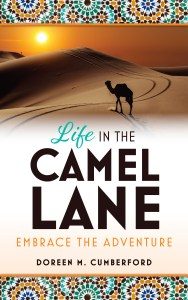
#1 Life in the Camel Lane: Embrace the Adventure

Doreen M Cumberford

(White Heather Press)

In 1995, Doreen Cumberford catapulted herself into an extraordinary adventure halfway around the world. Leaving a comfortable American lifestyle, she moved to Saudi Arabia with her husband and toddler.

A rich and rewarding read.


good-life-in-france-expat-books-2020-expat-nest

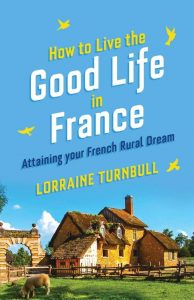
#2 How to Live the Good Life in France: Attaining Your French Rural Dream

Lorraine Turnbull

(Fat Sheep Press)

This practical and up-to-date book answers the common questions of relocating to rural France, including guidance on how to own animals or set up a smallholding, find and secure the right property for you, and start a rural business. Learn from others who have made the move, including the author.

If you’re dreaming of a simpler life…


#3 Death by Windmill: A Mother’s Murder in Amsterdam

 Jennifer S Alderson

(Traveling Life Press)

A Mother’s Day trip to the Netherlands turns deadly when a guest plummets from a windmill. Was it an accident or a murder?

A fun thriller with a Dutch twist.


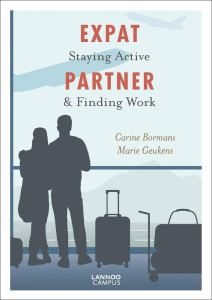
#4 Expat Partner: Staying Active & Finding Work

Carine Bormans and Marie Geukens

(Lanoo Publishers)

Can you plan your professional future as an expat partner? Can you pursue a career in your new location? What are your expectations and priorities?

Sage advice from the experts.


#5 Hanna and the Flying Carpet

Heidi Olsson

(Springtime Books)

Hanna is a girl who belongs in many places in the world, but she’s sick of goodbyes. Omar got new opportunities in a new country, but he misses his cousins. Abdi is an inventive guy who found a solution when he missed his grandma. Three kids with magic eyes on a magic adventure.

A magical multi-cultural tale for kids.


#6 Life Beyond the Castanets: My Love Affair with Spain: Book 2

Jean Roberts

(Independently published)

With their life in Spain established, Jean and Adrian look forward to an idyllic retirement. But when Mother Nature throws up formidable fires, floods and flu, their dreams, along with much of their house, are shattered.

An absorbing read for these COVID days.


#7 Raising Global Teens: A Practical Handbook for Parenting in the 21st Century

Anisha Abraham

(Summertime Publishing)

Globalization has given many of us unparalleled opportunities to work, travel, fall in love, and raise kids all over the world. But it has made being a teen more complicated than ever.

Enlightening for all parents, regardless of where you are.


#8 The Accidental Business Nomad: A Survival Guide for Working Across a Shrinking Planet

Kyle Hegarty

(Nicholas Brealey Publishing)

An unvarnished, story-driven, practical guide to working across cultures. The book features real stories of companies going global, warts and all. Each is a fascinating lesson on the cultural realities and unexpected surprises of modern globalisation.

Candid, entertaining and packed with real life stories.


what about your saucepans_expat books 2020_expat nest

#9 What About Your Saucepans?

Lindsay de Feliz gave up marriage and a successful career in the UK to follow her dreams as a scuba diving instructor in the Dominican Republic. She met and married her Dominican man and went on an incredible adventure that also had a dark side – political corruption. Lindsay tells it how it is, and in the telling her deep love for the Dominican Republic, its culture and its people shines through.


A compelling story interwoven with just the right amount of humour


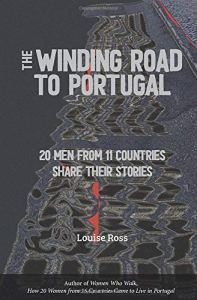
#10 The Winding Road to Portugal: 20 Men from 11 Countries Share Their Stories

Louise Ross

(Moyhill Publishing)

How do men navigate life at a time fraught with great uncertainty and rapid change, working and moving country to country, on their own or with a family? Is their path easy, because they’re men, fortuned with greater liberties than women? Or do they encounter a different set of challenges, faced with the complexities of what it means to be a man today?

Clever and well-crafted book which lets the men do the talking.


For information as to how Relocation Africa can help you with your Mobility, Immigration, Research, Remuneration, and Expat Tax needs, email info@relocationafrica.com, or call us on +27 21 763 4240.

Sources: [1], [2]. Image sources: [1], [2].
South Africans banded together and voted for Cape Town’s Table Mountain Aerial Cableway, as it has been announced as Africa’s Leading Tourism Attraction by the World Travel Awards.

“At this point in time where tourism and travel has suffered greatly as a result of COVID-19, we are extremely pleased to bring this accolade home to South Africa and Cape Town in particular,” says Wahida Parker, Managing Director of Table Mountain Aerial Cableway Company (TMACC).

“This incredible award recognises the enigmatic beauty that has made Table Mountain one of the best tourist attractions in the world – having seen more than 29 million visitors reach the top of its summit by the aerial cableway over the decades.”

“We are excited about the recognition, honour and responsibility that this place on us, and inspired at the prospect that we could claim the distinction of leading attraction of the world!”

Parker salutes and thanks TMACC’s fellow contenders, which included iconic African giants; Mountain Kilimanjaro in Tanzania, Ngorongoro Crater in Tanzania, the Pyramids of Giza in Egypt, and two of the fellow Cape Town Big Six attractions – Robben Island and the V&A Waterfront.

In addition to Table Mountain’s win this year, Cape Town also walked away with the recognition of being ‘Africa’s Leading Festival & Event Destination’ in the awards.

For more information about Cape Town, visit the Cape Town Tourism website here.


For information as to how Relocation Africa can help you with your Mobility, Immigration, Research, Remuneration, and Expat Tax needs, email info@relocationafrica.com, or call us on +27 21 763 4240.

Sources: [1], [2]. Image sources: [1], [2].
This article was first published by Vivian Chiona of Expat Nest.

As expats, we’re often encouraged to “get out there” and make new friends so that we can feel more at home in our host country. If you’re an introvert, this may feel way out of your comfort zone. Expat Nest shares three simple tips for introverts abroad.

How do you think of yourself – introvert, extrovert, or ambivert? (Take this fun quiz and see if you agree with the results.) If you’re a more introverted expat, you probably replenish your energy with time alone. You may be more reserved and will tend to avoid “small talk”, instead preferring deeper connections built over time or through a shared passion.

An incredible perk of being an introvert is that you know how to enjoy your own company. You can be fulfilled spending time in solitude or at home, doing something you truly enjoy. This can be a huge advantage if you live a nomadic lifestyle, as you’re able to feel content no matter where you are.

Introverts also tend to be naturally introspective – the ability to go within, develop self-awareness and continue to grow are important life skills, and introverts really get this!

However, it’s a myth that introverts don’t need other people (read more introvert myths here). We all need some form of social connection. And when the time comes to reach out, the more introverted expat may begin to feel pressured and anxious.

Simple tips for introverts living an expat life

1. There’s no rush

Solitude and silence are important – they top up your energy tanks so you can be present in the different areas of your life. If you’re an expat who identifies as an introvert, it makes sense to take your time before you begin opening yourself up to others. Find the balance between your need to spend time alone and your need to make connections in your adopted location.

2. Take small risks to build confidence

Sometimes it takes just a moment of bravery to change your life. Invite one person for coffee, for example, or attend a group event for a shorter period of time. And remember: even if you prefer deeper conversations, you have to start somewhere. A great technique for feeling more at ease is to focus on the other person—this takes the pressure off you)—and to ask questions so you can open a meaningful dialogue.

3. A shared passion

Discovering a common interest or cause sparks a deeper connection with others. Do some research on events happening near you and become a member of a community of people as passionate as you are. Consider taking up a hobby you were already doing when you were back home or try something you’ve never had the chance to do before. This will give you the impetus to interact with like-minded individuals and grow roots in your adopted home.


For information as to how Relocation Africa can help you with your Mobility, Immigration, Research, Remuneration, and Expat Tax needs, email info@relocationafrica.com, or call us on +27 21 763 4240.

Sources: [1], [2]. Image sources: [1], [2].