Despite diseases and terrorism, Africa still remains a ripe field for entrepreneurship if only enterprises could embrace venture capital to develop their trades.
When disaster strikes in Africa, investment momentum experiences major impediments with donors reluctant to fund ventures in the continent.

TO GO WITH Lifestyle-IT-India-business-village FEATURE by Ammu Kannampilly In a picture taken on November 18, 2010 a neigbhourhood shopkeeper writes down transaction details after transferring money for customers using text commands on a mobile phone in New Delhi. India's hunger for new technology is as sharp in its countless small villages as in its shiny office towers or shopping malls -- and businesses are waking up to an area of massive potential growth. Specific designs being aimed at Indian villagers include a mobile phone cash-transfer system, robust low-energy refrigerators and a clever twist on the humble kitchen stove. AFP PHOTO/Manpreet ROMANA (Photo credit should read MANPREET ROMANA/AFP/Getty Images)

However, Mbwana Alliy is optimistic that “Africa is about to peak” and it is time to invest in the region.

According to Mr Alliy, who co-founded Savannah Fund, a seed capital investment firm located in Nairobi, Kenya, smartphone connectivity, an emerging middle class, and opportunities for technology are unprecedented and provide great platforms to expand enterprises in Africa.

“When there is a negative event, like Ebola or a terrorist incident, investment momentum gets set back and talent leaves,” he said noting that enterprises can benefit better from venture capital.

Source

Africa is viewed as a highly challenging environment to do business in. Despite this, however, Africa’s growing frontier markets have become increasingly significant to the world’s economy. Comprehensive economic reforms, improving business environments, effective political reforms and good governance have all promoted foreign investment and contributed to Africa’s economic growth.africa-doing-business
While the low price of oil is certainly a major headwind for African markets, the International Monetary Fund forecast indicates that African economies will regain their growth momentum as the real GDP growth in the region will rebound to 4.3 percent in 2016, after it fell from 5.0 percent in 2014 to 3.75 percent in 2015.
Here are the economic prospects of three of the brightest lights in sub-Saharan Africa today.

Nigeria
Nigeria is one of the most resilient markets in Africa. No country has gained more influence on the continent in recent years than the West African state. Indeed, despite external shocks, Nigeria has been able to maintain a reasonable level of economic and political stability.

Source

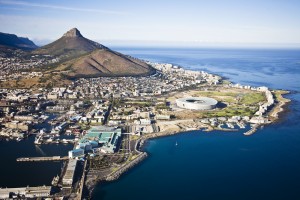
As travel surprises go, you can’t beat Cape Town. Tourists touch down at the airport, clutching their valuables and expecting a wild slice of Africa. The start of the journey into town doesn’t exactly shatter this preconception, as the N2 highway passes the townships of the Cape Flats, with their jumble of shacks, bungalows and state-subsidised ‘Mandela houses’. Groups of scantily clad boys happily kick a football or splash in a rainwater pool, as six lanes of cars surge past – a good example of the rainbow nation’s contrasts between African and Western lifestyles.

cape town lions head

Then you enter the city proper, perhaps on the mountainside rollercoaster of De Waal Drive, which crosses the lower slopes of Devil’s Peak with Table Bay and the harbour below. Finally, you round a corner and there it is, one of the world’s most iconic sights: Table Mountain. Beneath the cable car climbing to the 1000m-high plateau, well-to-do neighbourhoods pour into the aptly named City Bowl, sloshing up the sides of the sphinx-like Lion’s Head and Signal Hill. As the buildings run towards the sea, they become the towers of the CBD and the market complexes and museums of the V&A Waterfront precinct.

Source

Minor Hotel Group is hoping to acquire a presence in South Africa as part of its expansion plan to add 50 hotels in Africa to its portfolio within the next five years. Other areas earmarked for expansion include Lagos and Abuja in Nigeria and Ndola in Zambia.Minor-eyes-South-Africa-in-expansion-plans-800x400

The plans follow the R679.5 million (€40.68m) deal the group struck with Sun International in 2014, buying a stake in eight Sun International properties.

Source