The travel experts at Lonely Planet have revealed their selection of the best destinations for 2017 that travellers simply cannot afford to miss… and South Africa’s stunning Cape Town features high up as number two on the Top 10 Cities list.

Lonely Planet describes Capetonians as being deceptively laid-back whilst working hard to “add cultural and culinary cred to the Mother City’s famous natural charms, cementing its reputation as an African city with a global outlook.”

The local gastronomy is described as being as impressive as the city’s famous Table Mountain; and the endless wine estates, hip markets and inventive restaurants are highly praised.

Lonely Planet predicts the art and design scene in Cape Town will be given a boost next September (2017) when the much-anticipated Zeitz Museum of Contemporary Art Africa (MOCAA) is due to open, the largest of its kind.

Bordeaux in France won the coveted top spot (its “gastronomic revolution” being one of the reasons), with Los Angeles, USA, in third position.

Only one country from Africa made it into the Top 10 Countries list – and that’s Ethiopia (“as exotic as countries come”), at number 10. Last year Botswana was in the top spot. This year Canada, Colombia and Finland took the top three spots.

None of Africa’s wondrous locations made it into Lonely Planet’s Top Regions… but Namibia was selected as one of the Top 10 Best Value destination for those on a budget.

Namibia came in second, after Nepal, largely due to its dollar which Lonely Planet says has been depreciating in value thanks to being “pegged to the South African rand”.

There is also its awesomeness – from Etosha National Park, to the Fish River Canyon and the Sossusvlei Dunes; and “the great blue sky, contrasted with the clear starry nights”…

Source

The Department of Home Affairs has defended the introduction of a biometric data-capture system that has led to waiting periods of three to four hours at under-manned checkpoints at Johannesburg’s OR Tambo International Airport.

Home Affairs spokesman Mayihlome Tshwete conceded that there was a long waiting period but said the department was trying to make the system more efficient.

“[Biometric data-capture] is a trend everywhere in the world. The department is doing what it can to find ways to make it more efficient.”

“The tourism sector told the department to collect biometric data at our airports rather than at the countries of origin,” Tshwete said yesterday.

“Now, when some of these knock-on effects of biometrics happen, we are again put under the spotlight and we are expected to somehow create a magic wand that will make submitting biometrics faster.”

The biometric system, which captures travellers’ fingerprints at ports of entry, was introduced by the department in April last year, but rolled out in earnest in June at 65% of Home Affairs’ counters at arrivals and departures terminals.

Under the system a traveller’s photo and fingerprints are captured, and his passport is scanned and the image recorded.

The first time a traveller’sdata are captured by the system it records the prints of all 10 fingers. Subsequently only one finger will be scanned.

Tshwete said the department was “chronically underfunded”, which resulted in a shortage of employees at airports.

“We are working tirelessly, despite the limitations.”

Source

Malawian asylum seeker Charles Mkwapatira has made five trips from Cape Town to Pretoria to get a permit – all to no avail.

Mkwapatira was arrested in December 2015 with Patrick Makwinja in Witsand near Heidelberg and spent over a month in prison.

Investigator Nomvuyo Tempi said there was no evidence of him ever having entered the country legally. “The departmental movement control system, which captures all the movements of persons using travelling document while departing or arriving at a port entry into the Republic, was scrutinised and the following were discovered.”

“There are no records of the said foreign national entering or departing from the Republic. Therefore he contravened Section 49(1) of the Immigration Act. He is illegal in the Republic.”

Mkwapatria explained to the prosecutor that he had applied for asylum in 2011 and it was rejected. In response to allegations that he had entered the country illegally, he said he had entered with his passport, but it had since been stolen.

He was released on bail and told to go back to Malawi and get a new passport and report back to the police station in George before his trial. Mkwapatira went to Malawi and waited three weeks for a new passport.

In January on his return, he went straight to Marabastad in Pretoria to apply for asylum. He spent three weeks there, reporting to Home Affairs every Monday and Tuesday, the only days Malawians can get assistance. Finally, his employer in Heidelberg made several calls to Home Affairs and he was given a permit for one month and told to return for an interview.

Source

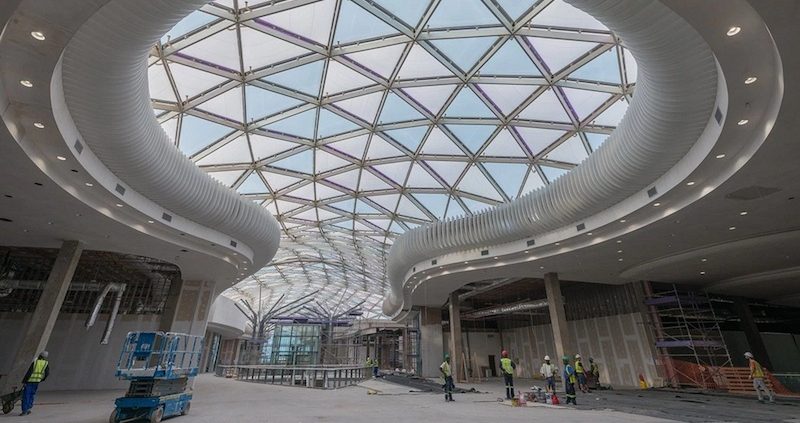
Sagaci Research recently released its fourth annual Shopping Malls across Africa report, which shows that there is strong growth in the number of new shopping malls across the continent for the fourth consecutive year.

In sub-Saharan Africa (excluding South Africa), while no retail centres achieved the top ‘AAA’ status – according to Sagaci’s rating – five were ranked ‘AA’. The rating is based on the malls’ attractiveness to international brands. All centres currently rated ‘AAA’ are in North Africa, and no new ‘AAA’-rated spaces were opened on the continent last year.

In light of the report, How we made it in Africa profiles sub-Saharan Africa’s top five shopping malls.

Bagatelle Mall of Mauritius, Bagatelle, Mauritius

bagatelle
Opened in 2011 and located fifteen minutes from the Mauritian capital of Port Louis, Bagatelle Mall of Mauritius has 150 stores, offering what the centre’s website claims is the “widest selection of speciality stores in Mauritius”. These stores include international labels such as Puma, Boss by Hugo Boss, and Guess. Celebrating its fifth anniversary this year, the mall is part of South African retail-centre developer Atterbury Group. Also located in the mall is a hotel, the Voila Atterbury, which has conference facilities in addition to accommodation.

West Hills Mall, Accra, Ghana

west-hills-gallery-03
West Mills Mall, which cost US$93m to build, is the largest mall in West Africa, and also part of the Atterbury Group. It is anchored by Edgars, Shoprite and Palace Hypermarket, and has South African and international brands. The mall opened in 2014 and the second phase, which will add 7,000m² to the centre – taking it to 34,700m² – will be completed in 2017. West Hills is located just off the newly completed Cape Coast highway.


Mega Centre, Windhoek, Namibia

megacentre
Windoek’s Mega Centre is anchored by Pick n Pay – Namibia’s 20th branch of the South African retail giant – and Pupkewitz MegaBuild, a Namibian hardware-store brand that occupies almost half of the 17,000 m² shopping centre. The mall also has branches of other South African brands such as Pep and Walton’s, as well as a Virgin Active gym.


PlaYce Marcory, Abidjan, Ivory Coast

playcePlaYce Marcory opened in December 2015, with the first Carrefour store – part of the French retail and grocery group of the same name – in Africa. The centre has 55 other stores, including French chocolatier Jeff Bruges and beauty brand L’Occitane, as well as Italian jeweller Brosway, and a food court. The mall is the brainchild of CFAO, a brand distributor with a presence in 34 African countries. Since opening, the mall has hosted an exhibition of art from Bassam, (after gunmen opened fire in the seaside village, killing eighteen people); a music festival, and a fashion week, as well as erecting a large screen in the food court, where mall-goers could watch the EURO 2016 football championship.

Sea Plaza, Dakar, Senegal

seaplazaDakar’s Sea Plaza has 70 stores, including international brands Hugo Boss, Diesel and Mango, as well as restaurants, a 12-lane bowling alley and a seven-screen cinema. The mall, which opened in 2010, is adjacent to a Radisson Blu hotel, and has views of the Atlantic Ocean. It is located on Cornish Bay, 13km from Dakar’s Léopold Sédar Senghor International Airport. Senegal was pinpointed as a ‘key hotspot’ by Ecobank earlier this year, with an expected GDP growth of 6%.


This article was originally posted here.