Unabridged birth certificates to stay for now

There is no timeline to scrap the requirement for minors travelling to and from South Africa to present an unabridged birth certificate.

Requirements for unabridged birth certificates (UBC) for minors travelling to the country will remain in place for the unforeseeable future, says Tourism Minister, Derek Hanekom.

Speaking to Tourism Update following his budget vote in Parliament he said the lifting of the requirements was a priority for his office that remained in “intense discussions” with the Department of Home Affairs.

“Unlike the issues we had with the in person visa applications, sorting out of the UBC requires a regulation amendment. We are in discussion to find an appropriate amendment that will give effect to Cabinet’s decision to lift the requirements,” he said. “This process is a joint activity between tourism and home affairs at present and is getting attention.”

Hanekom was however loath to give a time line to the process only stating that the decision to lift the UBC was binding. “It is a Cabinet decision and it must happen,” he said.

He advised travellers to continue travelling with UBCs saying it was uncertain at this stage how long changing the regulation would take.

Earlier, Satsa CEO David Frost said statistics received from SAA estimated an average of 40 people a day were being turned away from traveling to South Africa because of continued confusion surrounding the UBC requirements.

Hanekom acknowledged industry frustration over the matter saying it was receiving attention at the highest level.

The impact of the new visa and UBC requirements was ongoing, said Democratic Alliance shadow minister James Vos.

“More must be done to hold cross-cutting Ministries to account. We cannot have a situation, such as that which occurred whereby Home Affairs issues visa regulations without considering the tourism impact,” he said.

Tourism in 2015 saw an overall decline of 6,8% which is largely being contributed to the impact of the visa regulations and UBC requirements.

“The issue around visa regulations has been partly solved in many of our markets, in some completely solved while in others new challenges are emerging,” said Hanekom. “In China allowing applications to be made by travel agents on behalf of travellers has been hugely positive and the market is rebounding very quickly. China is a key source market and we hope to grow the number of travellers from China to South Africa significantly. In India for example the visa regulation remains problematic and the solutions we have implemented have only made a small difference. We continue to work towards finding solutions to address the challenges that exist and those that arise.”

He said capacity around visa facilitations centers was proving to be extremely challenging as well as the issuing of visa’s taking too long.

“If there is uncertainty whether a visa will even be issued or if it is taking too long then one has to understand the business case being made by companies that it is far better to take on business that is a surety,” said Hanekom. “Indian travel companies remain enthusiastic about South Africa. The country has a booming outbound travel market and massive growth potential for us and so it is imperative that we find a solution to the challenges being faced.”

Hanekom reiterated that creating ease of access to South Africa was a priority.

“Our task is to persuade more tourists to choose South Africa for leisure and business travel and to make it as easy as possible for tourists to visit us. We have made progress in implementing Cabinet’s decisions on changes to the immigrations relations, but there is still work to be done.”

Further information or questions please contact: tracy@relocationafrica.com

Kenya flag

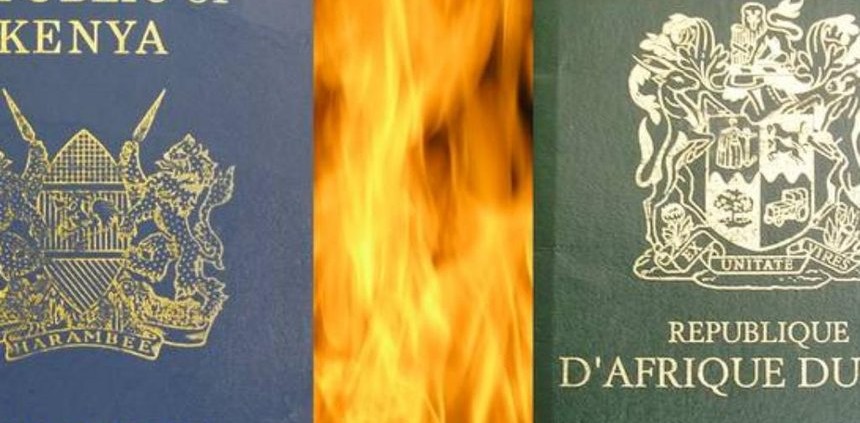
Cape Town – Discussions held between Kenya’s Minister of Interior and Co-ordination of National Government of Kenya, Joseph Nkaissery, and SA’s Minister of Home Affairs Malusi Gigaba, will see travel regulations eased between the two countries’ borders.

One of the main adjustments to the visa regulations will see an issuing of a three-year multiple entry visa for frequent travellers. Visa service fees have also been decreased by more than R300.

In July 2015, South Africa’s controversial visa regulations, which required Kenyans to submit applications for clearance to travel and wait for seven working days to confirm whether a visa would be issued, was described as a violation of bilateral agreement between the countries, according to Kenya’s Cabinet Secretary of Foreign Affairs and International Trade, Amina Mohammed.

Such issues has been resolved and improved according to the Department of Home Affairs, following Minister Gigaba’s three-day visit to the country from 2 to 4 May.

During the visit, the two Ministers “opened an important door to the establishment of a high-level strategic dialogue that will ensure issues are resolved amicably and expeditiously,” the DHA said.

The following decisions regarding travel between Kenya and South Africa were taken: 

•         Visa exemption for holders of diplomatic and official passports

•         A decrease in the service fee. Fees have been decreased from $71 to $49, a downscale of $22, or about R300.

•         The issuing of three year multiple entry visas for frequent travellers

•         Issuing of study visas for the duration of students’ study periods (including extending permanent residents to those studying in the critical skill categories)

•         Removal of transit visa for travellers transiting through South African airports

•         Ten year multiple entry visas for frequent business travellers and academics

The latter, awarding frequent African business travellers multiple entry visas, also formed part of South Africa’s previous visa regulation adjustment which aims to spur business travel on the African continent.

The new flight route between Kenya’s Nairobi and Cape Town in SA, taking off in July this year, will be a certain hit for travellers, especially considered along the eased visa regulations.

Kenya is in the process of easing visa regulations for travellers from all over, to enhance tourism in the country.

In January this year, President Uhuru Kenyatta announced plans to waive visa fees for children under the age of 16. While this move will still require visa regulations to be in place for minors to obtain access into the country, there will be no costs involved.

The country also launched e-visas for UK and Irish travellers in July last year, which raised the question why the DHA in South Africa was making visa requirements to the country more strict.

Regarding the new eased regulations between Kenya and SA, the DHA says they will continue meet with representatives of the Kenyan/South African private sector with a view to learning the challenges faced by the Kenyan business community in their travels to South Africa as well as exchanging views on how to ease the business people’s visa requests.

They said they will continue to discuss ways to ease travel between the two countries.

The announcement of adjustments to the visa regulations between Kenya and SA comes after Gigaba’s three – day official visit to Kenya from 2 to 4 May this year.   Contact immigration@relocationafrica.com for advise and information.

The South African government has announced measures to relax visa rules for Kenyan travellers as a fresh move to strengthen bilateral ties.

The measures announced on Tuesday will include visa exemption for holders of diplomatic and official passports, issuing of three-year multiple entry visa for frequent travellers, and a 10-year multiple entry visa for frequent business travellers and academics, the SA Department of Home Affairs (DHA) said.

South Africa will also issue study visas for the duration of study (including extending permanent residence to those studying within the critical skills category) and remove transit visas for travellers transiting through South African airports, the DHA said in a statement.

Service fee for visa applications will be cut from 71$ (Sh7177.14) to 49$ (Sh4953.24), the department said.

The DHA made the announcement as SA Minister of Home Affairs Malusi Gigaba was paying a three-day visit to Kenya.

Gigaba held talks with Kenyan officials on bilateral, regional and multilateral issues of mutual interest, including updating each other on the various respective initiatives being undertaken to fight trans-national crimes such as terrorism, drug-trafficking, illegal arms, money-laundering and illegal migration.

“These are issues that continue to be constraints on implementing free movement of travellers,” it said. Endit.

This comes after two years of back and forth between the two countries placing meausre on issuance of visas making it almost impossible for ordinary citizens of these economic powerhouses to visit each other, than it would be for either country’s citizens to visit Britain or the United States.

South Africa introduced a raft of changes to its visa regime in 2014 May making it impossible for all foreigners to renew their visas within its borders, of course with the exception of Zimbabweans under the special dispensation regime.

Two weeks later in June, Kenya responded proposing strict conditions effective from 1 September 2014 which only targeted South Africans travelling into and transiting through the East African country.

Kenya has not been issuing visas to South Africans at the port of entry making South Africans wait for a week before travelling into or transiting through Kenya.

http://www.the-star.co.ke/news/2016/05/04/south-africa-announces-plans-to-relax-visa-rules-for-kenyan-travellers_c13440661344067

Uber has partnered with BMW and Nissan in South Africa to make electric cars available to Uber drivers and riders, offering much-need exposure to the new technology for South African auto dealers, manufacturers and consumers.
South African users of Uber’s ride-hailing app will have a new, environmentally friendly option as of May 9, when, for a limited time, riders in Johannesburg can choose UberGREEN when hailing a ride on their smartphone apps and try out an electric car ride as part of a pilot project.Uber
UberGreen isn’t entirely new. Uber has partnered before with auto dealers. Uber users in various cities around the world have had the option to ride green on a limited basis before.
An UberGREEN pilot project is underway in Portugal for three months from March 7 to June 6 for riders in Lisbon and in Porto, according to UberNewsroom.
In May 2015, Uber partnered with the Guangzhou Automobile company in the Chinese city of Wuhan to offer 10 hybrid electric cars in an experiment to see if commuters like them. “Once it rolls out to consumers … it’ll be called UberGREEN,” TechInAsia reported.
In observation of Earth Day, Uber Bostonnallowed users to choose hybrid and electric cars when hailing a ride between 7 a.m. and 7 p.m. on April 22, 2016, Bostinno reported.

Source