JOHANNESBURG – South Africa has identified a number of “sleeper cells” set up by militant groups that aim to use the country as a logistical base, its interior minister said on Friday, without giving further details.

Home Affairs Minister Malusi Gigaba’s comments come after police arrested four people in July who they said were planning attacks on US and Jewish-owned targets in the country.

“The South African government is aware that there are people who are using South Africa as a logistic hub, as a hideout, and there are sleeper cells,” Gigaba told a news conference.

He said the government knows who they are and has the situation under control.

Asked what action was being taken, he said: “We don’t talk about those things. Our security forces are acting on those issues in a manner which we think is best for us.”

In July, South African police said they had arrested four people,including twins, who were accused of planning attacks on the US embassy in the capital, Pretoria, as well as on buildings owned by Jewish people.

Source

Pretoria – Three foreign nationals were injured in clashes between their group and security personnel at the Home Affairs refugee centre in Marabastad.

According to the foreign nationals, they got angry because they were required to pay bribes in order to get assistance. However, Home Affairs denied this and said Somalis and Ethiopians were clashing about who should be assisted first.

Ahmed Hassan, who was assaulted, allegedly by a security guard, said he fell to the ground and fainted.

Later, he told the Pretoria News: “My wife, who is eight months’ pregnant, can’t access hospital or clinic services until I pay R1 500 to get our papers sorted at this centre.

 “I feel like this situation was designed to dehumanise us and send a message to us that we are unwanted in this country.”
 On realising Hassan was on the ground, the other foreign nationals started throwing stones at security personnel. The riot escalated when metro police fired rubber bullets at the foreign nationals. A security guard was injured after being hit by a stone. Windows at the centre were also smashed.

The centre remained closed for most of the day, with police keeping an eye on the situation.

Motorists could not drive through E’skia Mphahlele Drive as the road was blocked with stones and rubble. “We were peaceful, but when Hassan was hit like an animal, we started to retaliate,” said Yahya Ali.

He said hundreds of cases of vulnerable asylum seekers at the centre were documented regularly in the hope that a change in policy and systems would decrease the high level of corruption.

“These people solicit bribes. I stood outside since the early hours of the morning and they never gave me attention because I had not paid,” said Mohammed Elme.

He said the department always blamed them for the anarchy at the centre. “But the reality is that this was created… to control the influx of foreign nationals to South Africa.”

However, Home Affairs spokesman Mayihlome Tshwete said the riot had nothing to do with corruption. “It was a clash between the Somalia and Ethiopian nationals, apparently because the other group demanded preferential treatment over the other,” he said.

Tshwete said even if the allegations were true, public violence was not the proper way to address it.

Source

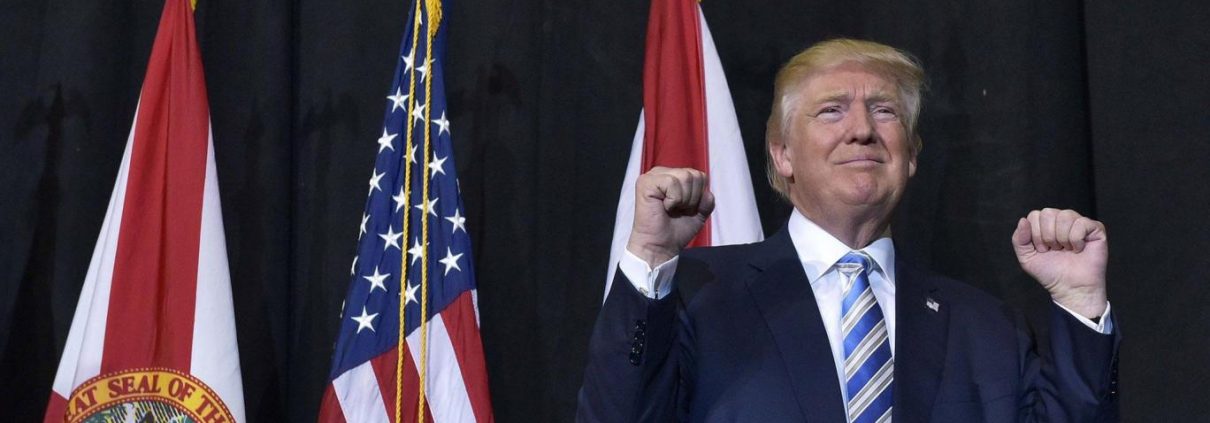
The Republican nominee, Donald Trump has sensationally won the White House as the next President of the United States of America and democratically elected Leader of the Free World. But what, if anything, does this mean for South Africa?

US Consul General of the United States in South Africa, Teddy Taylor recently advised that there is no reason to expect any changes in the US’ relationship with Southern Africa.“People change, but our institutions remain the same. Our institutions will survive the results of the elections,”said Taylor. According to Taylor, US foreign policy is (currently) geared to strengthen governance and institutions of governance to enhance trade and create jobs

A key question would therefore be the extent to which Obama’s successor will deviate from the present trajectory of US foreign policy.

In this regard, the economic policy which has strongly been advocated by President-Elect Donald Trump to date, has been very isolationist. During his campaign, Trump indicated multiple times that should he win, harsher trade restrictions will be put in place with emerging markets such as Mexico and China – thereby creating more job opportunities for Americans.

In addition, on the topic of South Africa, Trump stated during his campaign:“South Africa is a total and very dangerous mess”. Trump also expressed his views on South Africa upon the passing of former-president Nelson Mandela: “I really like Nelson Mandela but South Africa is a crime ridden mess that is just waiting to explode – not a good situation for the people”.Trump has also during his campaign been less engaged on international trade, foreign aid and providing multilateral solutions to international problems such as climate change. It is therefore likely that Trump will be loathe to engage with South Africa during his tenure as President.

What would this mean for South Africa? The African Growth and Opportunity Act (AGOA) is a United States Trade Act, enacted on 18 May 2000. This Act seeks to provide assistance to African economies and to facilitate bilateral trade between Africa and the US through the provision of, for example, tax free exports from African countries to the US.

Source

South Africa had symptoms in the 90s, very much like those that sailed across oceans searching for the American dream.

The South Africa dream opened up post apartheid to previously disadvantaged South Africans, and those in neighbouring countries, but it seems those very doors are being shut under President Jacob Zuma’s rule.

Local factors are dire, with one in four work seekers unemployed, while economic growth is anaemic, struggling to pierce the 1% line.

And the emigration stats, as analysed by economist John Maynard, paint a sorry tale. The biggest drain is to Mozambique and Zimbabwe, which shows it’s not only the rich and famous jetting off to countries like Australia, New Zealand or Canada that are leaving the South African dream behind.

The article was first published on the South African Market Insights blog. – Stuart Lowman

By John Maynard*

We take a look at where people staying in South Africa are heading once they decide to emigrate, be it due to job opportunities or economic circumstances, adventure, fear of crime or where the country they are heading off to is their country of birth.

It’s been long known that Australia, New Zealand and Canada are hotspots for South Africans that emigrate. The numbers below show where South Africans have been heading from 2006 (data relevant to end 2015).

So where are people heading when they leave South African shores?

The map shows the main countries South Africans emigrate to once they decide to leave South Africa (2006-2015).

Emigration

The numbers above are sure to surprise as it shows the largest number of emigrants from South Africa are heading to Mozambique and Zimbabwe. This is more than likely Mozambicans and Zimbabweans heading back to their country of birth. As the survey these results are derived from do not ask the nationality of those who emigrated but purely where they emigrated to.

Source