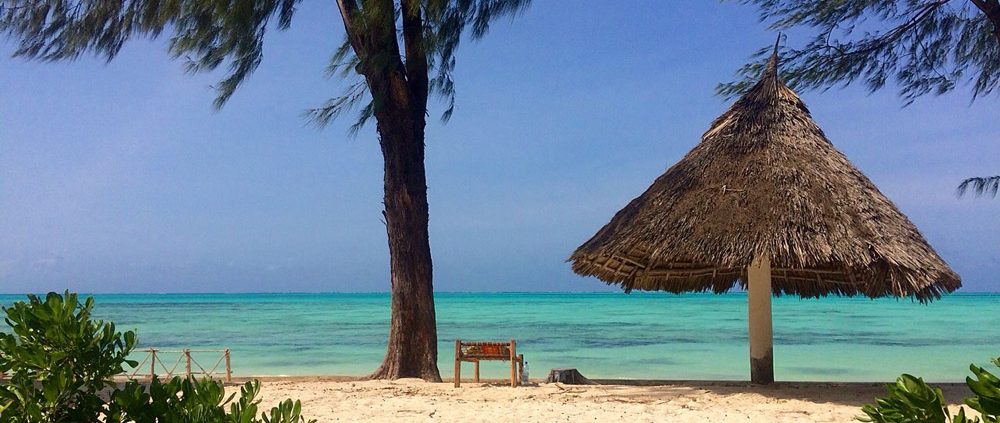
East Africa has an irrepressible allure, and I’ve become addicted to its vibrant kangas (patterned fabric), its friendly people and its crystal clear waters. So, in order to get my next Kiswahili fix, we headed to Unguja Island – more commonly known as Zanzibar – which is just a two-hour ferry ride from the Tanzanian coastal capital of Dar es Salaam, or a direct flight from many African cities.

Thanks to its close proximity and budget airline options, the largest island in the Zanzibar Archipelago is an easily accessible and relatively affordable idyll where South African residents with itchy feet can spend their crashing currency. And with a week’s prescription of sun, sea, sand and Stone Town tucked between the pages of my passport, a holiday in Zanzibar proved to be just what the doctor ordered to take the edge off my East African cravings.

Our first stop was Stone Town – the historical part of Zanzibar City and a UNESCO World Heritage Site, which lies 10 minutes from the international airport on a western headland that protrudes into the Indian Ocean.

Stone Town has all the accoutrements of a magician, whereby the distractions of noise and charm mask its subtle changes to amaze and astound the amateur. It is a hypnotist by whose acquaintance you allow yourself to be harmlessly deceived as you wander beguiled under its spell; submitting to its whims at every indiscernible turn.

Its smoke and mirrors are a labyrinth of coralline ragstone and mangrove timber architecture, and its urban fabric tells the tale of the town’s former life as a Swahili trading port. The now crumbling buildings were once moulded under the influence of disparate cultures from Asia to Europe, and its notorious history as East Africa’s main slave market remains imprisoned in the foundations.

Source

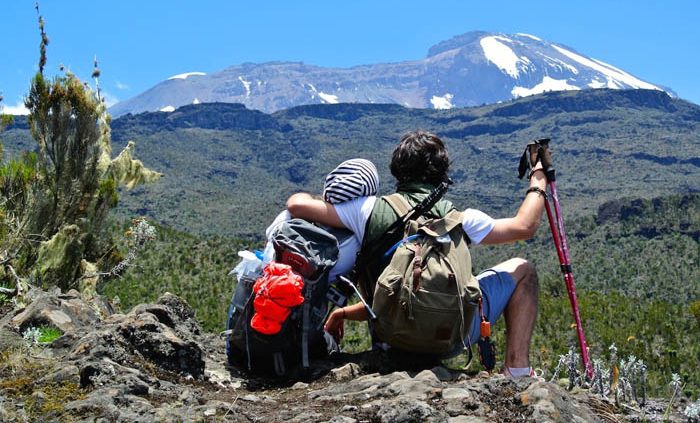
There are plenty of wrong ways to climb Kilimanjaro – wrong shoes, wrong backpack or wearing a full evening dress, perhaps. But the right way to climb it will depend on how fit you are, what your preferences are and how you like your challenges.

Let’s take a look at the routes and you’ll be clearer about which route is best for you.

Marangu Route

The Marangu Route is an old favourite. It’s the most well-established route and used to be the most popular because the slopes are more gentle and easier to climb. It’s also called the Coca-Cola route because if you can drink a can of cola then you can climb this route. Or because it makes you gassy. We’re not sure.

However, in the recent years Marangu Route has been kicked into second place by the more popular Machame Route – more of this in a minute!

Marangu Route advantages:

It’s the easiest – its slopes are the gentlest of all the routes so it’s great for a beginner or if you’re a little out of shape.
It’s the cheapest and fastest. It’ll take you five or six days to the summit.
It is the only route with hut accommodation in a dormitory style, so you won’t need camping equipment.
It’s a less busy route because there are a limited number of beds in the huts, so only a certain number of climbers are allowed per day.
Marangu Route disadvantages:

The climb is gentle but it’s rapid, which means acclimatisation could be a problem. We recommend an extra day to make sure you give yourself a good chance of making it to the top. “Pole, pole” (slowly, slowly) is Kilimanjaro’s motto, and you’ll need to take it slow. An extra day will cost a little more, which is not great for those on a budget.
Because it’s a quick route, with less time for acclimatisation, the success rate of making to the summit is lower than on the longer routes.
The route is there and back, which means the scenery, although as magnificent as you’d expect, will be the same on the way back as on the ascent.

Source

Tourism Update highlights not-to-be missed cultural attractions, as suggested by trade stakeholders.

A good starting point for an exploration of South Africa’s multi-cultures, and one that gets the vote of Laura Vercuil of Johannesburg Tourism, is the Origins Centre on the campus of Wits University in Johannesburg. Tracing an 80 000-year journey into the past, it highlights the earliest art and culture inspirations on the continent, as well as an exploration of San beliefs.

When talking cultural attractions,” saysGaongalelwe Tiro, GTA’s Manager: Communications, “Lesedi Cultural Village in Broederstroom immediately comes to mind. It gives visitors an insight into the diverse cultures of the people of South Africa. The attraction is within an hour’s drive of Johannesburg.”  Lesedi showcases the Zulu, Xhosa, Pedi, Basotho and Ndebele traditional ways of life.

But, as he further points out, modern, urban culture finds expression through cuisine, fashion and music. “Therefore, to take in the culture of the people Gauteng, one needs to traverse its streets and interact with them directly. Interacting with locals in Vilakazi Street, eating an authentically South African meal at a restaurant in Maboneng or visiting a nightspot in Mamelodi all help to immerse oneself in the culture of the people of Gauteng.”

Source

Several years later and you’re still on the move abroad… are you addicted to expat life? If these telltale signs are true, it’s time to admit you’re a serial expat.

1. Your passport is an adventurous read

You have wings, not roots, and your passport pages prove it. Even your dog’s passport has more stamps than the average tourist but who’s counting anyway.

2. Your furniture and home decoration are a testimony of where you once lived

A couch from South Africa, carpet from the Middle East, artwork from Brazil, blankets from Scotland. Home is everywhere.

3. You’re a master at packing up and unpacking your house

Excel sheets, checklists, customs forms, bubble wrap: No worries, you’ve got this, ninja style.

4. You always crave that dish you can’t have

Because that one restaurant is located on the other side of the world. Or that one ingredient is just not available where you live now.

5. You have to save money to attend the weddings you’re invited to

They take place in all corners of the world.

6. Your friends are scattered all over the globe

And you dream of having them all together in one place some day. Maybe you should get married and have a wedding.

7. You forget which side of the road the cars drive

Left, right, right, left, you lost track a while ago. Best to go with the flow – and remember to look both ways when crossing the street.

8. You keep track of what goes on in all the countries you’ve lived

Politics, economy, gossip from around the world: it’s a day job. In fact, you’d make a great reporter. Anyone know if CNN has any vacancies?

9. You are an unofficial ambassador of your ‘home’ country – and the ones you’ve ever lived in

Again, it’s practically your (second) day job: making business connections, joining embassy events, explaining local customs and comparing political party viewpoints. Why isn’t anyone paying you for this?

10. Your parents think you work for the CIA

And you should be (see #8 and #9).

11. You can answer the question ‘where are you from’ in less than 30 seconds.

Although, it could easily take 10 minutes because where you live now is not where you lived before, nor is it where you were born nor where your passport’s from. What was home some years ago is not home now, and what is home now will not be home some years from now. Ain’t nobody got time for that, though.

12. You don’t know who to support in the World Cup or Olympics

Passport country? Current country? Country you spent most time in? Partner’s home country? Kids’ home country? Pets’ home country? Sigh. May the best team win.

13. You include words from several languages into one sentence

Some things are best described with that one word that just doesn’t translate. But that’s just an excuse – in reality your brain just can’t juggle it all anymore.

14. You easily adapt your English verbiage and accent as necessary

Pavement/sidewalk/footpath, toilet/washroom/loo, jersey/sweatshirt/jumper, dummy/pacifier/soother – you have ’em all down. It’s just that your parents now think you speak with an accent.

15. You know it’s of utmost importance to befriend someone with access to international shipping perks

There are some places even top online shopping platforms doesn’t deliver. Hello Embassy staff!

16. You list all your past addresses and dates you lived there in a special document

Someone needs to keep track.

17. You pray your children will not apply for the foreign service

And have to answer questions such as ‘list all foreigners you’ve been in contact with’. At least you’ll have #16.

18. You fear the day you have to get a certificate of good conduct from all the places you’ve ever lived

And make sure it’s certified, with all the right stamps and then some, and also translated by an official translator. Again, at least you’ll have #16.

19. You have to track bank accounts in various countries

They come in handy all the time.

20. You’re a master in converting currencies

Pound, dollar, euro, rand, metical, dirham; divide, multiply, add, subtract. You have a phone app that does it marvelously well.

21. You have a bag full of change from different countries

You’ll use it… some day.

22. You met some of your best friends through Facebook

Thanks and hallelujah to the makers of social media!

23. You realise it isn’t the easiest life you’ve chosen

The goodbyes, the hellos, the making new friends, the finding of new accommodation, the selling of stuff, the buying of stuff, the breaking of stuff by the movers, the stuff that gets hijacked by customs, the stuff that isn’t allowed into the new country, the new jobs, the new languages, the settling in, the getting bored, the having to leave too soon, or not soon enough.

But you wouldn’t want it any other way.


The original article was posted here.