• Now is the best time to invest in Africa. There are development opportunities ranging from road, rail, airports and an increasing middle class population that is in need of quality goods and services.


Africa is on the move, and most international businesses are not aware of the continent’s investment opportunities. Although in the past there have been gaps, there has been a sea change and some investors who were patient enough have reaped from their hard work.ethiopia1463119136258_aspR_1.622_w754_h465_e400

Africa is formalizing its economy in a bid to attract more investors, both local and foreign. The continent also boasts a growing young population, with urbanization expected to drive over 50% of Africans to cities by 2050.

One major caution while investing in the fastest growing economy is that the region will test an investor’s patience. That is not to say that investors should hold back. On the contrary, economists believe it’s time for investors to channel their money into Africa due to a number of factors that are falling into place including the increasing middle-class population.

Tarek Sultan Al Essa, Chief Executive Officer and Vice-Chairman, Board of Agility, Kuwait expounds on six reasons why investors should consider investing in Africa, in an article which is part of World Economic Forum’s Africa series dubbed ‘Agenda in Focus: Africa’.

Africa needs ‘connectors’

Africa lacks adequate roads, rails, ports, airports, power grids and IT backbone which are key to lifting African economies. The insufficient infrastructure hinders the robust growth of imports, exports, and regional business.
Source

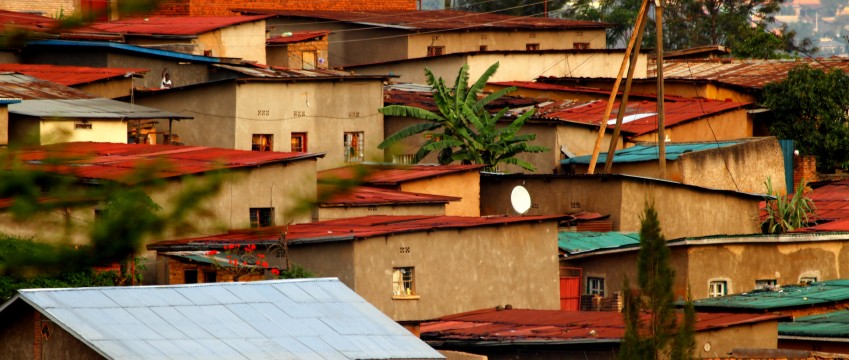
Rwanda is one of the 10 most attractive nations in Africa for investors, according to the 2016 Ernst & Young (EY) Africa Attractiveness Index. The country was ranked ninth and the second most preferred investment destination in East Africa after Kenya, which came fourth on the continental ranking and first in the region. Tanzania and Uganda were ranked 12th and 13th, respectively, on the continent.Colorful Hillside Homes

The report, released last week, evaluates progress made in governance, diversification, infrastructures, business enablement, human development, as well as resilience to current macro-economic challenges.

According to the survey, South Africa is the most attractive nation for investors followed by Morocco, Egypt, Kenya, Mauritius, Ghana, Botswana, Tunisia and Rwanda. Cote d’Ivoire comes tenth.

Though Rwanda, Botswana, and Mauritius are small markets, they have good performances in terms of business enablement, social development and economic management, the survey indicated.

Source

ZIMBABWE must, immediately, kick out all Chinese nationals, the opposition People’s Democratic Party (PDP) said Monday.zimbabwe_2272383b

The opposition party accused Beijing of blatantly pillaging the economically crippled country.

Little of the mega-deals promised by Beijing have materialised but the Chinese have externalised billions of dollars from Zimbabwe, leaving behind a collapsed economy with millions of locals unemployed.

“The PDP calls on all Zimbabweans and other international stakeholders to come together and call for the Chinese to exit our country immediately,” said Willias Madzimure, PDP Secretary for International Relations.

“They (Chinese nationals) have contributed nothing of value except to aid a corrupt and repressive political system while looting away our national resources.”

President Robert Mugabe, a former darling of the West knighted by the British Crown, pivoted towards China after western capitals shut their doors on him; displeased with his violent rule and electoral chicanery – so they charged.

Source

On 11 May, media reports and videos emerged of Uganda’s primary opposition figure, Kizza Besigye, staging his own presidential swearing-in ceremony in downtown Kampala. Besigye was then promptly arrested by authorities at the pseudo-inauguration, which took place exactly one day before incumbent President Yoweri Museveni was set to take his official oath of office. Besigye’s act of defiance formed part of an ongoing protest campaign against Museveni and his contentious victory in the country’s 18 February presidential ballot. Opposition actors such as Besigye and his Forum for Democratic Change (FDC) party have continuously denounced the election results, citing allegations of electoral fraud, voter intimidation, and general electoral maleficence. Although a number of protests to this effect have taken place in the post-election period, there has been a notable increase in both the incidence and scale of opposition unrest in the past month. The government in turn has responded forcibly to any opposition gatherings, eventually calling for a ban on all FDC-related activities.Besigye

Besigye’s arrest on 11 May was to be expected, given the government’s antagonistic position towards the FDC, as well as the fact that Museveni’s administration has arguably set a precedent for arresting opposition figures on politically motivated charges.

Source