Seaports mark the starkest of borders. Here, water. There, land. In each direction: distinctly different imaginings of the unknown region beyond.

motorbike mombasa

Courtesy of PROGlenn Stark / mombasa

Mombasa is one of those dream starter places for me. When I look east, toward the water, I see the ghost images of centuries of sailing ships coming and going from the Arabian Peninsula, the Indian subcontinent, China and even Europe.

When I look west, there’s the bustling modern port, a historic gateway to the heart of East Africa but with the distinctive sounds and scents of the Arab world.

Past, present and future converge in my mind’s eye as I think about this complex city, the second largest in Kenya.
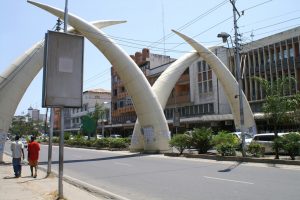
mombasa kenya moi

Mombasa is not at all like the Kenyan capital of Nairobi. There, members of all the various tribes of the country and descendants of former colonialists make their homes in a cosmopolitan city founded a couple of hundred miles inland, an arbitrary stopping point along the rail line planned in the 1890s by the British when they ruled this part of the continent.

Source

Africa’s economic growth declined in 2015, as did the global economy at large, but despite all the negative publicity focused on the slowing economy, the Southern African region actually grew its economy during the year, according to the U.N. Economic Commission for Africa Report 2016.Maputo-skyline-with-crane-620x350
Africa’s economy declined overall from 3.9 percent in 2014 to 3.7 percent in 2015. Only Southern Africa and North Africa recorded positive growth over 2014.

North Africa
Growth in North Africa (excluding Libya) accelerated from 2.8 percent in 2014 to 3.6 percent in 2015, with the help of improved political and economic stability, and increased business confidence, especially in Egypt and Tunisia, Pulse reported.
Mauritania had the steadiest and fastest growth in the region, supported by sound macroeconomic and structural policies, the U.N. reported. Mining and construction, shored up by private investment and consumption, saw exceptionally high investment of about 45 percent of GDP. Large infrastructure projects in Egypt such as the Suez Canal expansion got a boost from external aid and investment. Algeria’s oil production picked up for the first time in eight years.

Source

Kenya is the biggest economy in East Africa. It has a population of 45.5 million people, most of who practice Christianity.Uhuru-Kenyatta
It is one of the fastest growing economies in the region. There has been solid growth in infrastructure, manufacturing, and service industries. This has made it a leading destination for investors.

Below are eight things that one needs to know before investing in the country.

Source

Ethiopia has been aggressively seeking foreign direct investment in garment and leather manufacturing. Global brands from H&M and Wrangler to Lee, Calvin Klein, and Timberland all have a presence in Ethiopia, Mail&Guardian reported.agenda_caption_one-619x350
Ethiopia and Kenya both were identified as top sourcing destinations by apparel companies, according to McKinsey & Co., which surveyed global executives responsible for procuring $70 billion of goods annually.
Within sub-Saharan Africa, East African countries—especially Ethiopia and Kenya, and to a lesser extent Uganda and Tanzania—are of interest to apparel buyers. The governments of both Ethiopia and Kenya are taking steps to develop their domestic textile and garment industries, McKinsey reported.
It was the first time an African country was mentioned in the report alongside Bangladesh, Vietnam and Myanmar, Mail&Guardian reported.
Since 2013, there has been rising interest in not just Ethiopia but also other East African countries as potential sourcing destinations for apparel, McKinsey reported. Also contributing to the buzz is the renewal of the African Growth and Opportunity Act (AGOA), which gives certain countries in sub-Saharan Africa duty-free access to U.S. markets.

Source