After spending four nights travelling through Savuti in Botswana, we set off to dive deep into the Okavango Delta. After already having had a few of the most amazing and thrilling days and nights in Savuti, a game reserve higher up in Botswana, I thought we had experienced it all. We slept in the middle of the wildest bush I have ever experienced (only three of us, a tent and our open vehicle), in the middle of the local trekking ground for a herd of elephants by day and hyenas by night. Not to mention the nightly chorus of lions, leopards and trumpeting elephants to fall asleep to, I really thought we had gotten as close to the wild Botswana bush as we could.
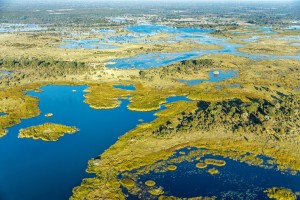
Okavango Delta

But then we arrived on the edge on the Okavango Delta, a secluded spot where our speed boat was going to pick us up to take us to the island where we were going to spend the next few nights. I instantly knew that this trip was going to become even more breath-taking. I usually research the places that I travel to beforehand, so that I have some sense of what I’m getting myself into. I hadn’t done this before our trip into the Delta, and I think it made the whole experience even more amazing.

Source

  1. The ConCourt Ruling shows that democracy works The recent Constitutional Court ruling regarding the fact that president Jacob Zuma is required to pay back some of the money that was wasted on his Nkandla residence, as a confirmation of the independent powers of the public prosecutor’s office is a massive win for democracy, and a sign that South Africa’s democracy remains routed in the constitution.zuma1459700845394_aspR_1.794_w400_h223_e400

Source

Given its size and diversity, Africa has long been an investment destination and an attractive one for the Gulf Cooperation Council (GCC), with Qatar and Saudi Arabia buying farmland across the continent. A 2015 research by Economist Intelligence Unit (EIU), entitled Beyond Commodities: Gulf investors and the new Africa, commissioned by the Dubai Chamber of Commerce and Industry, has pointed out that the current trend is more towards foreign direct investment (FDI), moving away only from agro-businesses. The Edge’s Aparajita Mukherjee analyses the investment trends and opportunities for the GCC in Africa.

29 Dec 2013, Uganda --- Tea plantation in the mountains of southern Uganda, East Africa, Africa --- Image by © Michael Runkel/robertharding/Corbis

The push among GCC states to invest in Africa was driven more by necessity than choice following the 2007 to 2008 global food price crisis. In a region that is import dependent for 60 to 80 percent of its food requirements, the decision to invest was clearly a strategic one.
The GCC countries face the burden of a growing population, with growth of around 40 percent expected by 2030 over the 2010 figures. This means that they are faced with a food supply stretch coupled with prices that are exposed to geopolitical uncertainties and the vagaries of climate change.
Qatar, for instance, imports about 90 percent of its food requirements annually, and this is expected to increase 153 percent over the next decade as the population grows. This will undoubtedly make the country vulnerable to price fluctuations. To ward off against these, like other GCC nations primarily Saudi Arabia, Qatar has invested in land acquisitions in Africa, notably in Sudan and Kenya, among several other locations.

Source

A workplace that focuses on humanity is a powerful motivator and business driver. It calls for leaders that care about their employees’ well-being, happiness and success, and employees that feel recognized and appreciated for their contributions to a company.

These key practices and behaviors that inspire positive employee behavior and deliver improved business results, are the focus of a new employee survey from our WorkHuman Research Institute. The survey results provide a blueprint for workplace practices that deliver greater employee happiness and higher retention. In particular the survey highlights one crucial finding: companies on the vanguard of creating a more human workplace stand to reap significant rewards in terms of people metrics and return on investment.

To more successfully build the human workplace, employee recognition must be at the forefront. Surprisingly, our survey found that 40 percent of employees have not been recognized by their respective company leaders in the past month. That number is far too high. While employees seem happy at work, we know more is needed to better engage the workforce and produce a sense of well-being, trust, optimism, and confidence that can propel a company’s culture forward.

Source