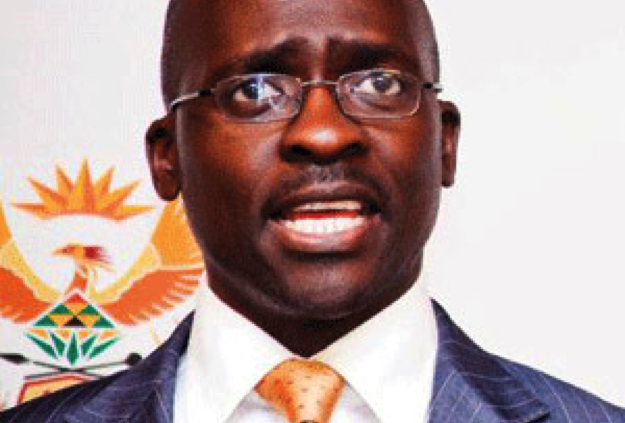
Home Affairs Minister Malusi Gigaba on Sunday toured the revamped and technologically advanced Marabastad Refugee Reception Centre, west of Pretoria.

Gigaba said with the technological advancement his department hoped to curtail corruption at the facility which had previously been widely reported in the media.

“We hope to complete this process by the end of October so that we can open up this new revamped office which will now be paperless. The services are going to be streamlined… we have put a number of operation managers on the ground so that we assist in the flood of [asylum seeker] applications,” Gigaba told reporters inside the centre.

“We’re introducing an online booking system for people to come and be captured, then see the refugee status determination officers. If for some reason the decision on the application has not been made, or they [asylum seekers] have appealed, we have made the extensions of their asylum seeker permits to be paperless so that people can self-extend using kiosks which we are going to roll-out throughout the country.”

Under the new regulations, asylum seekers register for an appointment at automated machines which also captures their fingerprints and other details.

Source

PRETORIA: There is hope for stateless children born in South Africa who do not have any citizenship, with the Supreme Court of Appeal in Bloemfontein last week giving Home Affairs 18 months to streamline regulations that will make it easier for other stateless children to apply for citizenship.

This was sparked by an application on behalf of an eight-year-old girl born in Cape Town in 2008 of Cuban parents. She was born in South Africa, but Home Affairs refused to register her. This was because neither of her parents were South Africans.

The Cuban government did not recognise her as a citizen, nor did the South African government. Her mother came to South Africa in 2005 on a treaty programme to work here as an engineer.

Her father joined the mother a year later. The mother was regarded as a “permanent emigrant” under Cuban law due to her absence from the country. She only became a permanent resident in South Africa in 2011.

Source

The African Union is mooting a passport that would allow visa-free movement for citizens of African countries across the continent, following country-level trends of abolishing visa requirements for African nationalities.

The African Union Passport, launched in July, could considerably ease student mobility and save countries millions of dollars spent in tuition fees in overseas universities each year. However, questions remain around capacity, credit transfer and the likelihood of its adoption by big player South Africa.

Initially, the passport will only be available to heads of state, AU officials and some government officials.

“Universities in Africa do not have strong linkages with each other and this is one area that would need to be strengthened”

However, a rollout across its 54 member states, which include all African states except Morocco, is planned by 2020, and student mobility in the continent’s higher education sector could become its biggest and earliest beneficiary.

In the last two years, a move by three countries – Rwanda, Benin and Ghana – to abolish entry visas for Africans has also been causing excitement in the higher education sector across the continent, with observers agreeing that the move will hugely boost internationalisation of education.

Source

More foreigners are calling Uganda home. Many expatriates in Kampala for example think it’s a comfortable and easy place to live.

The ranking for the 2016 best and worst place to live for expatriates is out and Uganda is ahead of the US, UK and Switzerland listed as the most favoured country in Africa.

According to a survey published by the Expat insider, Uganda is 25th in the world.

Source