Cape Town – Since 2014 there has been a “delink” of business confidence in the Western Cape from the rest of South Africa, with higher business confidence in the province compared to the rest of the country, Tim Harris, CEO of Wesgro, told members of the SA-German Chamber of Commerce on Tuesday.

In his view, this is one of the reasons for the “incredible migration” into the province – especially from Gauteng. “People are voting with their feet for quality of life and it shows business is not necessarily synonymous with Johannesburg,” said Harris. He emphasised that a large part of the “semigration” from Gauteng consists of young entrepreneurs – especially in the tech and services industry – who bring their skills, capital and experience to the province.

After visiting different regions in Germany in an official capacity, Harris realised South Africa actually needs to embrace internal competition among its regions. In his view, that is what turned the German economy into “the most competitive in the world”.

Source

Relocation Africa attended the luncheon on the 16th August in support of building confidence within the WESTERN CAPE’s Economic outlook and South Africa’s growing economy.

Most informal economic activity in most African countries involves cross border trade Informal cross-border trade constitutes the majority of informal activity in most African countries. In the 15-member Southern African Development Community (SADC), for example, informal cross-border trade makes up an estimated 30-to-40 percent of total intra-SADC trade, with an estimated value of $17.6 billion. Informal trade involves smuggling goods and avoiding formal border processes. It is practiced by companies of all sizes, by individuals unemployed in the formal economy,  and by people who have jobs but wish to supplement their salaries.

Source

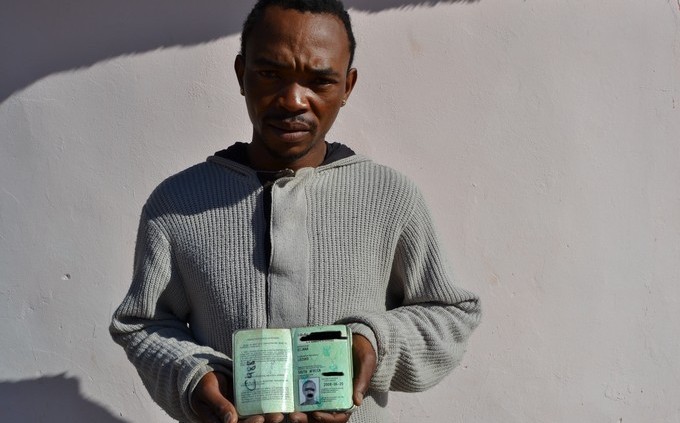
Luzuko Gijana (27) from Cofimvaba Magwala Village near Queenstown recently found out that someone else was using his name, surname and identification number.

He said he went to Home Affairs in Cofimvaba, who confirmed that there was another Luzuko Gijana with the same date of birth and ID number. The other Luzuko Gijana lives in Libode just outside Mthatha.

Gijana said the officials at Home Affairs in Cofimvaba advised him to apply for another ID which he did last year July but it never came back. He said he went back again after two months but was again advised to apply for another ID.

Department of Home Affairs in Cofimvaba has called people to visit their offices to fix their duplication identification books. This comes after GroundUp sent a media inquiry regarding a Cofimvaba man who’s been waiting months for Home Affairs to fix his duplicate ID.

Source

Africa Check clarifies if SA is home to the highest number of unresolved asylum cases in the world.

Researched by Richard Stupart, edited by Laura Grant and Nechama Brodie

With more than 3.2-million refugees and asylum seekers displaced in 2015 alone, is it possible that South Africa is home to the highest number of asylum seekers in the world?

When Africa Check was asked to investigate similar claims back in 2013, it found that asylum seeker data supplied by both the United Nations High Commissioner for Refugees (UNHCR) and South Africa’s Department of Home Affairs was “flawed, inaccurate, and sharply contradictory” – and that statements made to South African media, that the country had received the “highest number of asylum applications worldwide” – were unproven. Despite this, international media reports continue to list South Africa as being the country with “the most asylum seekers awaiting determination”.

In June 2016 the UNHCR published a new report on global trends in forced displacement, based on 2015 data. According to the report, by the end of 2015 the number of asylum claims in South Africa had risen to 1,096,063 – a rather startling figure considering that, in the previous reporting period (2014), South Africa had listed only 463,900 pending asylum claims. The UNHCR report was quickly picked up by local media, with headlines stating that there were “1-million asylum-seekers” in South Africa.

Source