Durban – A public prosecutor from the Ixopo Magistrate’s Court has been arrested for corruption, the Hawks in KwaZulu-Natal said on Thursday.

On Monday, police received information that Mduduzi Funeka, 40, had allegedly demanded money from a complainant in order for him not to be charged in a stock theft case, said Hawks spokesperson Captain Simphiwe Mhlongo.

Funeka was arrested on the court premises while accepting cash in an undercover operation.

He appeared in the Durban Specialised Commercial Crime Court on Tuesday and was granted R1 000 bail.

 The case was adjourned to January 20, 2017.

Fraudulent passport

In a separate incident, police arrested a senior home affairs official, Sibonelo Biyela, 33, for fraud.

Biyela was suspected of helping a foreign national obtain a fraudulent South African passport. He and his alleged accomplice, Linda Ncube, 31, were arrested at the same time. It was not clear whether Ncube was also an official at the department or not.

Source

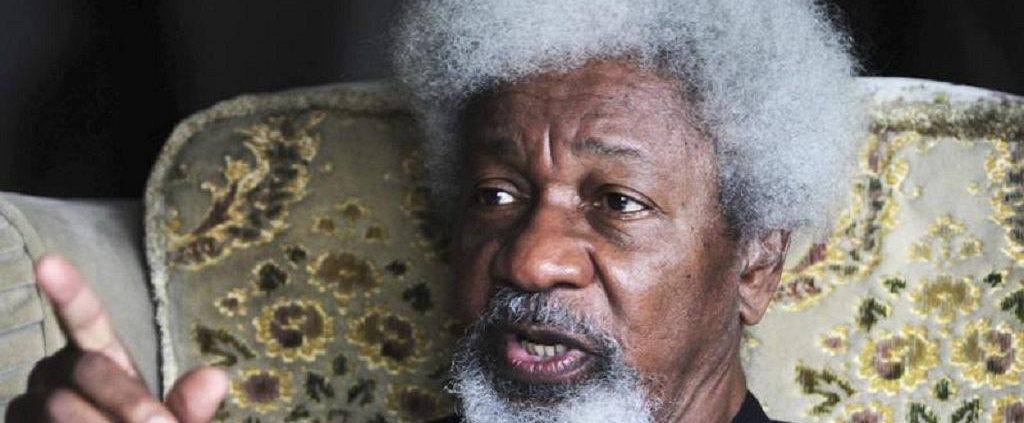
Nigerian Nobel-literature laureate Wole Soyinka has confirmed that he has relocated to his native Nigeria. The move is in line with his pledge to leave the United States if Donald Trump won the US elections.

 The infamous decision to rip apart his green card made the headlines before and after the November 8 polls that Trump won beating Hillary Clinton, his main contender.

A green card simply is a document that identifies the bearer as an alien with permanent resident status in the United States.

The 82-year-old told AFP on the sidelines of an education conference at the University of Johannesburg, South Africa: “I have already done it, I have disengaged (from the United States). I have done what I said I would do.

“I had a horror of what is to come with Trump… I threw away the (green) card, and I have relocated, and I’m back to where I have always been. It’s useful in many ways. I wouldn’t for one single moment discourage any Nigerians or anybody from acquiring a green card… but I have had enough of it,” he said.

Brief: Who is Wole Soyinka?

Full name, Akinwande Oluwole “Wole” Babatunde Soyinka, the prolific playwright, novelist and poet won the Nobel Prize for Literature in 1986 and has been a regular teacher at US universities including Harvard, Cornell and Yale.

Soyinka is one of Africa’s most famous writers and rights activists, he was jailed in 1967 for 22 months during Nigeria’s civil war.

He was reported to have recently completed a term as scholar-in-residence at New York University’s Institute of African American Affairs.

What exactly Soyinka said before the US elections

He was addressing students of Oxford University in the UK, Soyinka said it was unlikely that Trump would win but if he did then he will cut up the green card which allows him to stay in the US.

“If in the unlikely event he does win, the first thing he’ll do is to say [that] all green-card holders must reapply to come back into the US. Well, I’m not waiting for that. The moment they announce his victory, I will cut my green card myself and start packing up,” said Soyinka.

Soyinka was the first African to be awarded the Nobel Prize in Literature, in 1986.

After Trump win, he was reported to have said

“Why don’t we wait until Trump actually takes office? I am just going about my normal commitments, but definitely not getting into any more commitments. Let’s put it that way for now”.

Algeria December 1 2016

In continuation of our discussion on immigration considerations when seconding employees to key African jurisdictions, in this edition, we consider the People’s Republic of Algeria (Algeria).

Algeria’s corporate immigration framework

The employment of foreign nationals and their ability to do business in Algeria is governed by a series of laws and decrees including: Law 8-11 of 25 June 2008 (Loi No. 08-11 du 25 juin 2008 relative aux conditions d’entrée, de séjour et de circulation des étrangers en Algérie); Executive Decree 6-454 of 11 December 2006 (Décret exécutif n° 06-454 du 11 décembre 2006 relatif à la carte professionnelle délivrée aux étrangers exerçant sur le territoire national une activité commerciale, industrielle et artisanale ou une profession libérale); Presidential Decree 03-251 of 19 July 2003 (Décret présidentiel No. 03-251 du 19 Joumada El Oula 1424 correspondant au 19 juillet 2003 relative à la situation des étrangers en Algérie); Decree 82-510 of 25 December 1982 (Décret n° 82-510 du 25 décembre 1982, fixant les modalités d’attribution du permis de travail et de l’autorisation de travail temporaire aux travailleurs étrangers); Law 81-10 of 11 July 1981 (Loi No. 81-10 due 11 juillet 1981 relative aux conditions d’emploi des travalleurs étrangers); and Law 90-11 (Loi no 90-11 du 21 Avril 1990 relative aux relations de travail).

There is no official English translation of the Algerian laws and consulates appear to apply the regulations with slight modifications. For this reason, what follows should be considered a framework only and persons wishing to start businesses or send employees to Algeria should consult their nearest consultate or embassy in person.

Source

Immigrants to the U.S. from Ebola hit West African nations face deportation from May when their work permits expire after the Department of Homeland Security declared their Temporary Protected Status (TPS) will end on May 21, 2017.

The decision has spread fear amongst thousands of immigrants from Liberia, Guinea and Sierra Leone who were hard-hit by the Ebola virus that killed more than 11,000 people and led to economic stagnation in the three nations.

The immigrants said that despite the end of the outbreak in their countries they are not guaranteed good living conditions back home.

The three countries are some of the poorest in the world.

“There is no more Ebola, but our country is not safe. Here, if I dial 911, police come to my door. In Liberia, they tell you they don’t have gas for the patrol car to come to your rescue,” Tenneh Harris, one of the immigrants facing deported told the Philadelphia Inquirer.

The U.S. granted Liberian, Guinean and Sierra Leone nationals TPS following the outbreak of the deadly Ebola virus in 2014.

It however decided to end their stay after the World Health Organization (WHO) declared the West African nations free of the Ebola outbreak in January.

Temporary Protected Status is offered by the U.S. Department of Homeland Security if it considers that war, epidemics or natural disasters prevents immigrants from safety in their home countries.

Source